

This post reveals the story behind my barn owl drawing. It’ll give you an idea of how I make my art, my drawing methods, and my thought processes. If you’ve ever wondered how artists get their ideas, plan a drawing, and make sales, read this post. It will open your eyes.

This drawing shows a barn owl in flight, but it’s not quite as it seems. It’s a construct from a photograph I took that had ‘something’ I could use if i found a way.
Now let me make it quite clear, I set myself the task of only using my own reference material. That meant I had to use the photos I managed to take. That’s not easy. Most reference photos are useless.
Using Original Photo References
I had an owl drawing in my portfolio but it wasn’t selling as well as it should. I’m British, and the reason why my sales were low was because I’d drawn the wrong species. Yep, forget about how good the drawing is, the subject matter is all important.
This is one of the frustrations of drawing wildlife for a living, you must follow what the public wants to buy, not want you want to draw. You must be able tocompromise if you wish to sell art.
I listened to people and it was clear that when they asked if I had drawn any owls, they were picturing barn owls. It was obvious that I had to photograph one.
My chance came when I visited a falconry show, in a South African vineyard of all places!
Luckily they were flying a barn owl.
If you’ve ever tried taking a photo of a bird you’ll appreciate just how difficult it is to take a sharp image of bird in flight.
It’s hard now, even with all the hi-tech kit, 20 years ago it was much harder. the results were less than inspiring but I did have on photo that almost worked.

This image would win no awards, but it had potential. It was sharp enough to see the detail but what a pity the wing tip was missing.
I scoured the internet for similar barn owls in flight so I could add the missing wing. I found one, and that enabled me to draw authentic feathers.
Yes, I know I was making work for myself, but I have this need to be as truthful as possible. No one would know, or care, if it the drawing was that accurate, only me and the odd birder.
I only remember one guy sharp enough to notice an anomaly. He was knowledgeable enough to spot that I had drawn a South African barn owl, not a British one! Wow. There’s always one.
My Drawing Method
It was so long ago now that I can’t be 100% sure which pencil grades I used, but I can guess. I definitely used mechanical pencils. It will have been 2B for the darkest areas, B, HB, 2H, and 4H for the lightest tones.
I worked mostly outside in front of people in a market, so I did my preparation at home first so I could crack on with people looking on.
I photocopied the owl to the size I wanted to draw it. Its far easier to copy an image that way, well it is for me. I gridded the copy and made am identical grid very lightly drawn on my paper.
If you are going to draw a grid, always use a very light touch. If you score the paper it will show as a white line when you start shading. Be warned.
The rest is straight forward. I drew the outline by drawing each box. Note where a line crosses the box and mark it. It has to be in the right place. If you are confused draw a diagonal from one corner of the box to the other and use that as another guideline.
It’s almost foolproof.
My problem was less about the drawing itself, I knew after years of experience that it was likely to come good. My concern was the background.
I had a drawing of an owl but it lacked something and would be better if it had more movement.
No here’s the rub. If you are drawing meticulous detail with a 0.3mm lead point, it’s not at all natural to get all fast and loose with the background. They are too different styles and insanely hard to combine.
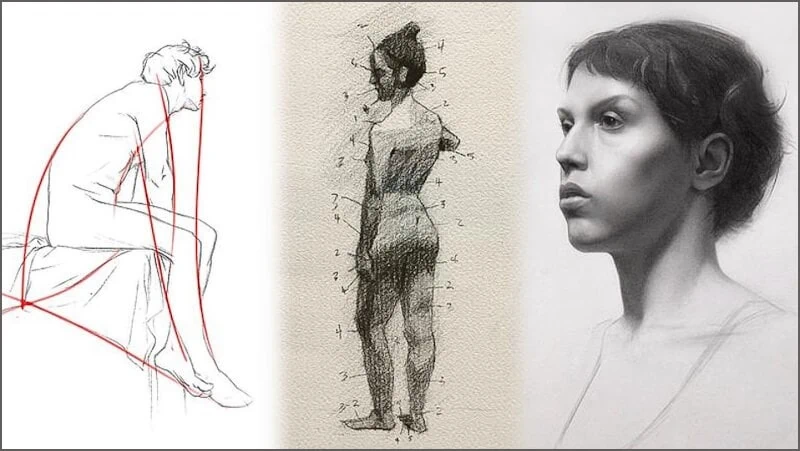
If you need more help with drawing, then I urge you to check out
Dorian Iten on Proko. His course is reasonably priced and inspiring
The only way was to put the drawing aside long enough for it to lose that precious feeling you get when you’re afraid to ruin things.
I wasn’t very successful. I drew the background as well as i could, but I was still afraid. That fear makes you super cautious.
The background kind of works. The owl stands out and the there is movement, but it’s more contrived than spontaneous. I’m hypercritical of myself I know, but I couldn’t let it go.
I printed the barn owl and immediately it sold better than the tawny owl it replaced. Job done in a commercial sense. But I wasn’t finished with the original. I tried again.

Is the black background any better 2nd time around? Probably not.
Ask most artists if a drawing or painting is ever finished and they’ll say no. It’s almost impossible to leave it alone.
Just to round this off, I thought you might be interested in seeing the other owl drawing that didn’t sell so well.

I’ve got a wealth of info like this if you need help selling from your own market pitch. Take a look

‘Night Flight’ A Framed Pencil Drawing of a Barn Owl
This will give you some idea of how the drawing/print looks when properly mounted and framed. It makes a big difference. It’s a simple charcoal gray frame with a wide bordered off-white mountboard.
It always looks better if you have a clear margin around the image with plenty of space to play with.


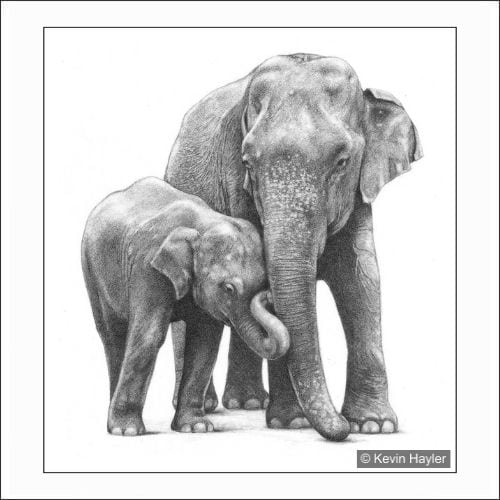
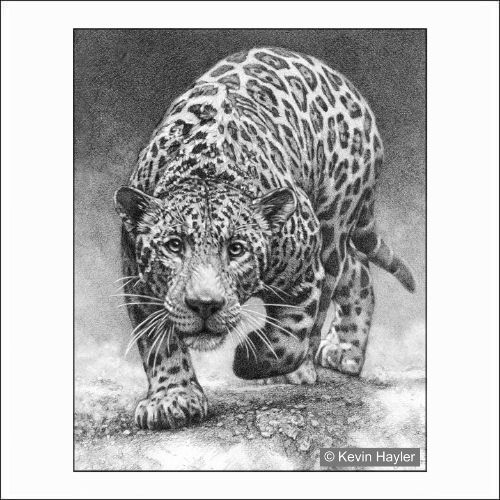
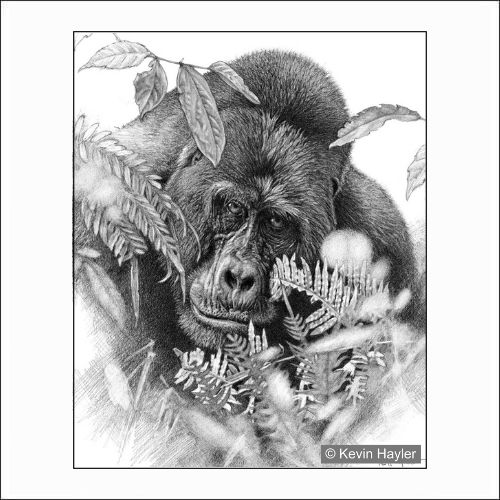
Check Out More Posts Like This

PIN THIS


Hi, I’m Kevin Hayler
I’ve been selling my wildlife art and traveling the world for over 20 years, and if that sounds too good to be true, I’ve done it all without social media, art school, or galleries!
I can show you how to do it. You’ll find a wealth of info on my site, about selling art, drawing tips, lifestyle, reviews, travel, my portfolio, and more. Enjoy