

Give a child a pencil and they rarely worry about talent. They draw because they want to make something. Adults complicate things. Somewhere along the way, the simple act of creating turns into a question of permission: can I really call myself an artist?
Hmm, tricky question
Disclaimer: When you buy something via my affiliate links I earn from qualifying purchases and sometimes earn a commission, at no extra cost to you. I am an Amazon Associate among others. I only recommend trusted sites.
So, Is Everyone An Artist?
It depends on what you mean by “artist.” If you mean someone capable of making something creative, then yes, almost everyone qualifies. Humans naturally invent, arrange, decorate, imagine and experiment.
But that definition has a problem. If every creative act makes someone an artist, the word starts to lose some of its meaning. Making a nice sandwich involves creative choices, but few people would describe themselves as sandwich artists.
Being creative and being an artist aren’t necessarily the same thing. Creativity describes an ability or an activity. Artist can describe an identity, a practice, a profession or some combination of all three.
Children Don’t Ask For Permission
Watch young children draw and you’ll notice something interesting. They don’t usually wonder if they’re qualified. They don’t compare their work with professional illustrators or worry about developing a recognisable style.
They make things because making things feels natural. Then judgement creeps in. Adults praise one child for being “good at art,” another child struggles to draw something accurately, and suddenly artistic ability looks like something you either possess or don’t.
That idea sticks around. Plenty of adults say, “I can’t draw,” when what they really mean is, “I can’t draw as well as I’d like.”

Drawing Badly Still Counts As Drawing
Nobody says they can’t run because they aren’t fast enough to enter the Olympics. Yet people regularly dismiss their ability to make art because their results don’t match professional work.
Skill changes the quality of what you produce. It doesn’t determine your right to produce it. You can draw badly, sing badly or write terrible poetry and still take part in the activity.
The more difficult question concerns the label. Does occasionally drawing make you an artist, or simply someone who sometimes draws?
Let’s Cut to The Chase. If You Want to Draw Try This
Drawing Course by Brent Eviston

The Word “Artist” Carries Several Meanings
This causes much of the confusion. We use the same word for very different things.
- Someone who makes art for pleasure.
- Someone who regularly creates and develops their own artwork.
- Someone who seriously pursues an artistic practice.
- Someone who earns some or all of their living by making art.
None of those definitions completely cancels out the others. A professional artist doesn’t own the word, but neither does every person who has ever doodled on a shopping list.
Context matters. If someone asks what you do for a living and you answer “I’m an artist,” they’ll probably assume art forms part of your occupation. At a life drawing class, the same answer might simply mean that making art matters to you.
Does Looking And Acting Like An Artist Make You One?
There’s another side to artistic identity that can get uncomfortable. Some people don’t simply make art. They cultivate the identity of “the artist.” The clothes, the mannerisms, the unconventional lifestyle, the carefully chosen opinions and, occasionally, an impressive command of art-speak all become part of the package.
There’s nothing wrong with looking flamboyant or enjoying an artistic social scene. Artists have always gathered together, influenced each other and developed their own fashions and language. But looking like an artist and making art are two completely different things.
You can dress conventionally, work a dull day job and quietly produce remarkable paintings every evening. You can also look every inch the bohemian artist and produce very little. Appearance tells us almost nothing.
When Artist Becomes A Status
The word “artist” can carry social status. It suggests creativity, individuality and a certain freedom from ordinary conventions. That makes the identity attractive even before we consider the actual work.
This is where the label can become pretentious. Someone may spend more energy performing the role of an artist than developing their art. The identity starts to depend on being seen as artistic rather than making something worth seeing.
Art-speak can play a similar role. Specialist language has a genuine purpose when it communicates an idea more precisely. It becomes less useful when simple ideas disappear beneath obscure terminology designed to make the speaker sound sophisticated.
You don’t need to talk about “interrogating visual narratives” if you’re trying to work out why one shape looks better next to another. You can, of course, but complicated language doesn’t make the underlying idea more profound.
Self-Identity Matters
None of this means you need to pass some authenticity test before calling yourself an artist. Self-identity matters because making art can become an important part of how you understand yourself, even if nobody pays you for it.
The distinction lies in what supports that identity. If you call yourself an artist because you consistently make art, explore ideas and develop your abilities, the label describes something you actually do. If the identity exists mainly through appearance, language and social signalling, the connection becomes harder to defend.
Perhaps the simplest test is to remove the audience. No fashionable clothes, artistic friends, social media profile, exhibition opening or impressive vocabulary. Would you still make art?
If the answer is yes, you’ve probably found the part that matters.
You Don’t Need To Make Money From Art
Money provides one clear dividing line between amateur and professional, but it doesn’t decide who counts as an artist. Plenty of serious artists earn nothing from their work. Some actively avoid turning their art into a business.
A professional artist has customers, deadlines, prices, expenses and commercial decisions to deal with. Those things change the nature of the activity. They don’t magically transform a non-artist into an artist.
Professional describes your relationship with the marketplace, not the legitimacy of your creativity.
Recognition Doesn’t Settle It Either
Exhibitions, awards, qualifications and sales provide outside validation. They can open doors and establish a reputation. You still don’t need any of them before you can make serious art.
History also makes external recognition a shaky test. Some artists attract attention quickly, others work quietly for decades, and countless people create worthwhile work that never reaches a large audience.
If recognition determines who counts, the definition depends too heavily on who happens to notice you.
Does Talent Get Too Much Credit?
People often treat artistic talent as something mysterious. Someone draws well and observers announce that they were “born talented.” That skips over the thousands of decisions, mistakes and repetitions that built the skill.
Natural differences certainly exist. Some people grasp proportion quickly. Others have an unusually good eye for colour, rhythm, shape or composition.
Those advantages only take you so far. Artistic skill grows through practice, observation, experimentation and correction. A talented beginner who rarely works can easily fall behind someone less naturally gifted who keeps learning.
This matters because the talent myth gives people an excuse to quit. If you believe artists arrive fully equipped, every clumsy early attempt looks like proof that you aren’t one.

What If The Idea Is The Art?
There’s a problem with defining an artist as someone who makes things. Some artists would reject that definition completely. They’d argue that art doesn’t have to depend on craft, technical skill or even making the finished object yourself.
Conceptual art pushes this argument to its limits. The artist might come up with an idea, select an existing object, arrange a situation or give instructions for somebody else to produce the physical work. In this view, the concept itself contains the art.
Marcel Duchamp famously challenged conventional ideas about art with his readymades. Instead of demonstrating his ability to paint or sculpt an object, he selected an existing manufactured object and presented it within an artistic context. The important act lay in the choice and the questions that choice raised.
Does An Artist Have To Make Anything?
This creates an interesting problem. If someone else fabricates your sculpture, are you still the artist? If you select an ordinary object and place it in a gallery, have you created art or simply changed its surroundings?
For many conceptual artists, the artistic act lies in conceiving, selecting, directing or reframing rather than physically making. Craft becomes one possible part of art rather than its defining feature.
That doesn’t mean skill disappears completely. The skills may simply change. Instead of drawing, painting or carving, the artist may rely on judgement, originality, communication, research and the ability to develop an idea.
You don’t have to accept that definition. Plenty of people believe craftsmanship and technical ability remain fundamental to art. Others see no reason why an artist needs either.
But Does Having An Idea Make Everyone An Artist?
This brings us straight back to the original question. Everyone has ideas. Everyone makes choices and interprets the world around them. If ideas themselves can constitute art, does everyone become an artist?
Probably not automatically. Otherwise almost any thought could qualify as art simply because somebody decided to call it art.
The more useful distinction may lie in what someone deliberately does with the idea. They develop it, present it, challenge it, place it within an artistic context or use it to communicate something to other people.
That still leaves plenty of room for argument, which is part of the point. Once you separate art from craftsmanship, defining exactly when someone becomes an artist gets considerably harder.
Making Art And Thinking Like An Artist
Technical skill only explains part of artistic development. An experienced artist also learns how to notice things other people overlook and how to decide what deserves attention.
You start asking different questions. Which details matter? What can you leave out? What feeling do you want the work to carry? Why does one composition feel stronger than another?
These aren’t questions with fixed answers. That’s exactly why they matter.
An artist makes choices rather than simply following instructions. Technique gives you more choices because it gives you greater control over the result.
Intent Makes A Difference
Imagine two people making identical marks on paper. One accidentally spills ink and wipes it around. The other deliberately experiments with ink to explore shape and movement.
The finished pages might look similar, but the process differs. One person cleaned up a spill. The other investigated an idea.
Intent doesn’t guarantee good art. It does help separate deliberate artistic activity from things that merely happen to look artistic.

Perhaps The Label Matters Less Than The Habit
People can spend too much time deciding if they deserve to call themselves artists. The argument rarely changes what happens when you sit down with a pencil, brush, camera, lump of clay or anything else.
You either make things or you don’t.
If you want art to become part of your life, the practical route looks surprisingly ordinary. Make work regularly. Learn the skills you need. Look carefully at other art. Work out what you like and why you like it.
Then make more.
You don’t need a ceremony where somebody hands you the title. At the same time, calling yourself an artist won’t develop your abilities. The work gives the label substance.
Frequently Asked Questions
Can Anyone Become An Artist?
Most people can learn artistic skills and improve them substantially through practice. Physical limitations may affect which methods someone uses, but art covers such a huge range of activities that there are many ways to create. You don’t need exceptional natural ability to begin.
Do You Need Talent To Be An Artist?
No. Natural aptitude can help, particularly during the early stages, but sustained practice matters enormously. Skills that look effortless usually have a lot of experience sitting behind them.
Can You Call Yourself An Artist If You Don’t Sell Your Work?
Yes. Selling makes you a commercial or professional artist when it becomes a business activity. It isn’t a requirement for making art or taking your artistic practice seriously.
Does Calling Yourself An Artist Make You An Artist?
Not necessarily. Anyone can adopt the label, but the label means more when something supports it. If you regularly create art, think seriously about your work and continue developing it, calling yourself an artist describes what you actually do.
Does Art Need To Be Good To Count As Art?
No, because “good” introduces another problem: who decides? People can agree that a work demonstrates considerable technical skill while disagreeing completely about its artistic value. Weak art is still art, just as a bad novel remains a novel.
Is Creativity The Same As Being Artistic?
Not quite. Creativity appears in engineering, cooking, gardening, business, science and countless everyday activities. Artistic creativity focuses that inventive impulse towards expression, interpretation or aesthetic choices.
Is Everyone An Artist? It Depends On The Question
Everyone probably has some capacity for artistic expression, but that doesn’t mean everyone needs to adopt “artist” as an identity. The distinction comes down to what you actually do with that capacity.
You don’t need permission, qualifications, sales, fashionable clothes, an artistic persona or an audience to make art. You need to make something, engage seriously with what you’re doing and decide if you want to keep going.
Call yourself an artist if the word genuinely describes what you do. Just remember that the identity follows the activity more convincingly than the activity follows the identity.
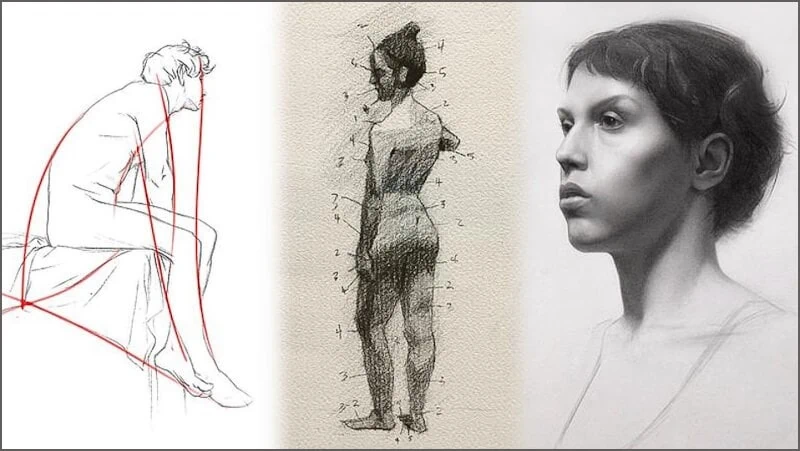
If you need help with drawing, then I urge you to check out
Dorian Iten on Proko. His course is reasonably priced and inspiring
Have a Look at These Posts too:
- 22 Myths About Artists: Misconceptions Debunked
- Creative Burnout: What is it? and How to Recover
- Do Artists Need a Degree in Art or is it a Waste of Money?
- Does Selling Art for a Living Make you Happy?
- Shy Artists: How to Succeed When You Are Introverted
- What is it Like To Be an Artist? The Truth Revealed
- How to Overcome Self-Doubt for Artists (Imposter Syndrome)
- Is Art School Worth it? Is it a Waste of Money?
Pin This


Hi, I’m Kevin Hayler
I’ve been selling my wildlife art and traveling the world for over 20 years, and if that sounds too good to be true, I’ve done it all without social media, art school, or galleries!
I can show you how to do it. You’ll find a wealth of info on my site, about selling art, drawing tips, lifestyle, reviews, travel, my portfolio, and more. Enjoy