

This post tells the story behind one of my lion drawing. You will see how the idea started, how I planned the composition, and the steps I took to finish the drawing. It also shows how I turn drawings like this into prints that sell.

I drew this young male lion after watching him on safari in the Ngorongoro Crater. It’s one of the best places in the world to see wild lions and my visit was a dream come true.
This lion was not alone. His brother was nearby. (out of shot)
Both males were young and in great condition. They had none of the scars you often see on older lions. They were young lions waiting for their chance to find a pride, hanging around together and biding their time.
This lion was resting in the open grasslands when we saw him. You can get remarkably close in a vehicle, so he was clear as day. His expression was calm, self assured and unphased by our presence. He looked relaxed but alert, and that pose is what made me want to draw him.
You might notice the setting looks like a classic African savannah. That part is artistic license. There were no acacia trees where I saw him down in the crater, I added those later because they worked better for the composition.
I only use my own reference photos so every shot had to count, and even with a clear view that’s not easy.
If it’s your dream to go on safari one day, you’ll soon realize the limitations of wildlife photography in a shared 4×4. Most of the time you must compromise.
You are sharing the experience with other guests who also want to take their ‘classic’ shot’. Some guests are more accommodating than others so you must have patience.
Not only that, some guides are better than others. Good guides will stop when ever you ask them, many will not. Some assume authority and reposition themselves regardless of your requests. Some will even ignore you completely. I’ve had them all.
It’s little wonder that I have gone on some trips with very few usable images to show for it.
Using Original Photo References
I had an existing lion drawing, which sold well as an open edition but it wasn’t wild and I much prefer to use wild references. Not only because it’s more satisfying as an experience but because It makes a story to be told when I’m selling the print.
For that reason I decided to make this new lion drawing into a limited edition print and tap a different market.
It’s always a gamble knowing whether to offer a print as an open or limited edition.
A bestselling open edition will bring in more profit over the long term, whereas a limited edition print has a high markup on each print, but is limited to a finite number. Hence, a limited profit potential.

This photograph is clear enough and captured the character nicely, look at those eyes. I knew it had potential. It was sharp enough to see the detail but what a shame there was no background to speak of and the tail was hidden.
I did as I always do these days and searched the internet for a similar image with a visible tail. All I needed was an idea of scale and placement. It’s harder than you think. I found one, and that enabled me to draw a more appealing composition.
My Drawing Method
This was drawn with mechanical pencils. I use 2B for the darkest areas, B, HB, 2H, and 4H for the lightest tones.
I photocopied the lion to the size I wanted to draw it. I find it far easier to copy an image that way. I gridded the copy and made an identical grid very lightly drawn on my paper.
I started by mapping out the lion very lightly. I worked through the grid one square at a time and drew the outline first. I kept the lines faint so I could adjust anything that looked wrong before I started shading.
TIP: If you are going to draw a grid, use a light touch. If you score the paper it will show as a white line when you start shading. Be warned.
The rest is straight forward. I drew the outline by drawing each box. Note where a line crosses the box and mark it. It has to be in the right place. If you are confused draw a diagonal from one corner of the box to the other and use that as another guideline.
It’s easy.
Once the outline was in place I worked on the main shapes. I blocked in the darkest areas first so I could see the structure of the head and body. That gave the drawing a solid base and helped me judge the mid tones and highlights.
The mane took the most time. I built it up slowly with short strokes, layering the tones to suggest depth and texture. I did not try to draw every hair. I focused on the main clumps and let the shading suggest the rest.
I worked across the face next. The eyes, nose, and mouth had to be accurate because they carry the character of the animal. Once those were right the whole drawing started to come together.

The body and grass came after that. I used darker tones in the foreground to anchor the lion and give the scene some depth. The background trees were drawn very lightly so they stayed in the distance and did not compete with the lion.
The whole process was slow and steady. I kept adjusting the tones until the lion looked grounded in the scene and the balance of light and dark felt right.
If you need help with drawing, then I urge you to check out
Dorian Iten on Proko. His course is reasonably priced and inspiring
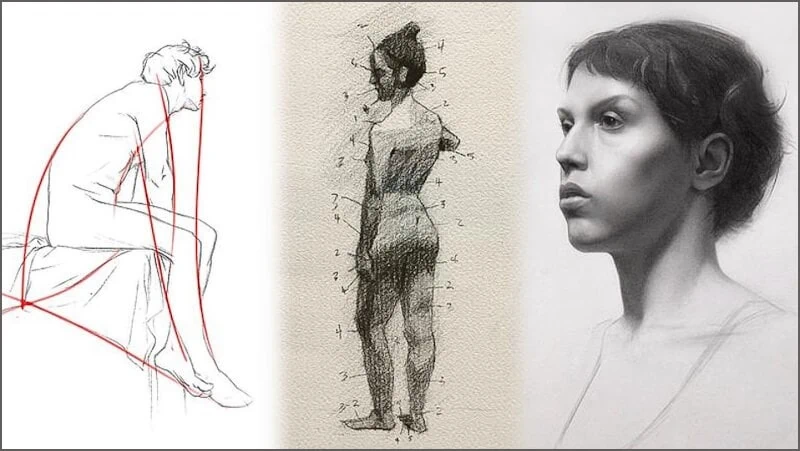
‘Lion Country’ A Framed Pencil Drawing of a Wild Lion
This will give you some idea of how the drawing/print looks when properly mounted and framed. It makes a big difference. It’s a simple charcoal gray frame with a wide bordered off-white mountboard.
It always looks better if you have a clear margin around the image with plenty of space to play with.

I’ve got a wealth of info like this if you need help selling from your own market pitch. Take a look

More posts in this series:
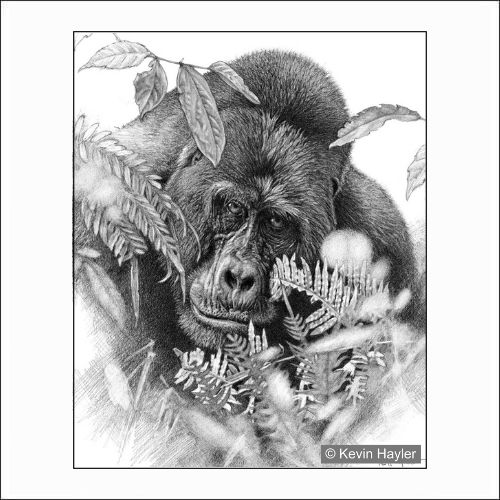
- Chimp Drawing: ‘Fingers and Thumbs’
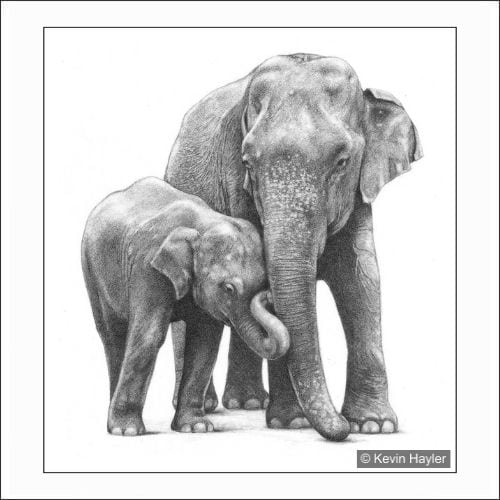
- Elephant Drawing: ‘Jumbo Family’
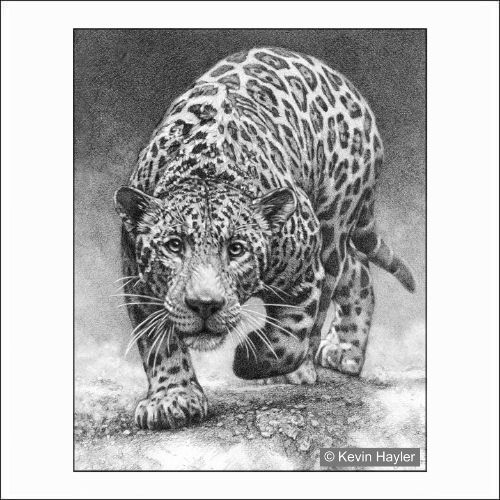
- Jaguar Drawing: ‘Eye Contact’
- Lion Drawing: ‘Head of the Family’
- Penguin Drawing: ‘Push and Shove’
- Wolf Drawing: ‘The Pack’
- Barn Owl Drawing: ‘Night Flight’
Check Out More Posts Like This

PIN THIS


Hi, I’m Kevin Hayler
I’ve been selling my wildlife art and traveling the world for over 20 years, and if that sounds too good to be true, I’ve done it all without social media, art school, or galleries!
I can show you how to do it. You’ll find a wealth of info on my site, about selling art, drawing tips, lifestyle, reviews, travel, my portfolio, and more. Enjoy