

If you’re an aspiring artist, you know the feeling. You fall down a YouTube rabbit hole, clicking through an endless stream of free drawing tutorials. You watch hours of videos on shading, perspective, and anatomy, yet when you sit down to draw, your work still feels stuck.
You’re putting in the time, but you’re not seeing the real, tangible improvement you crave.
It’s a common experience that leads to a critical question: with an ocean of high-quality free content available, are paid online drawing courses just a waste of money?
This article reveals the hidden economics of paid art education, breaking down the four main considerations.
Disclaimer: When you buy something via my affiliate links I earn from qualifying purchases and sometimes earn a commission, at no extra cost to you. I am an Amazon Associate among others. I only recommend trusted sites.
1. You’re Buying Back Your Time.
The common argument is that every basic drawing concept is available for free online, and this is demonstrably true.
High-quality, structured programs from professionals, such as the foundational drawing courses by Brent Eviston or the long-form lessons offered by The Drawing Database, can be found on platforms like YouTube, covering everything a beginner needs.
The catch is the hidden “Time Cost.” With free resources you are responsible for spending significant non-drawing time finding tutorials, vetting their quality, and organizing them into a logical sequence. The effort involved in this self-curation is immense.
The difference is how much work you’re willing to put in finding and sorting through the free stuff.
A paid course offers an “organizational premium.” You are paying for a pre-validated, sequential roadmap that eliminates the guesswork. This structure transforms you from a manager into a student, allowing you to spend your time practicing, not searching.
In essence, you are buying back your most valuable asset, your time.
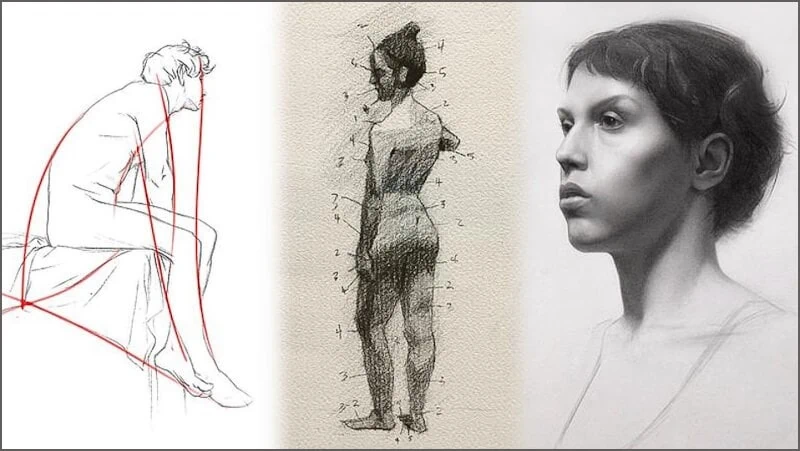
If you need more help with drawing, then you should check out
Dorian Iten on Proko. His course is reasonably priced and inspiring
2. Practice Doesn’t Make Perfect.
The belief that “more practice” is the sole key to improvement ignores a dangerous pitfall: the “Error Cost.” This is the time and effort wasted practicing incorrect or inefficient drawing techniques without expert coreection.
Unguided practice doesn’t just slow progress; it can actively ingrain bad habits that become incredibly difficult to unlearn.
A common beginner error, for example, is attempting advanced concepts like color before mastering foundational steps like shading and perspective. This only solidifies flawed methods, making genuine improvement much harder.
This is where the structure of a professional course becomes critical. A well-designed curriculum with expert intervention is specifically engineered to minimize this “Error Cost.”
By providing corrective feedback, instructors prevent you from reinforcing mistakes, ensuring that every hour of practice contributes to positive growth, not permanent flaws.
3. The Most Valuable Lesson is a Critique.
The single greatest value in creative education is instructor feedback. This is the critical, non-scalable resource that separates free tutorials from premium education.
While a video can show you what to do, only an experienced instructor can diagnose why your specific work isn’t succeeding and prescribe how to fix it.
The benefit is it is organized in terms of usefulness to your skill level so you get exactly what you need to improve at the stage you are at. Even better is if it actually includes a living person who provides tailored feedback to your work.
You can evaluate any course by its feedback model, which typically falls into one of three tiers:
- Tier 1: Community and Passive Feedback. Found in low-cost subscriptions like Skillshare, feedback relies on peer support or non-mandatory project submissions.
- Tier 2: Q&A and Limited Mentoring. Mid-range courses like Tucson Art Academy Online offer higher-priced tiers for the ability to ask specific questions of a tutor.
- Tier 3: Dedicated Instructor Critique. High-tier academies like Evolve Artist build their entire methodology around guaranteed, daily, objective critiques, ensuring continuous professional intervention.
This level of professional help is a scarce and expensive resource. This personalized guidance can be a game-changer for many artists.
It converts passive learning into corrective learning, which is the fastest way to break through the barriers and advance your skills
Now find all the drawing courses by Brent Eviston in one place. Perfect for the total Beginner

4. Money Equals Outcome
Here is a surprising psychological truth: the very act of paying for a course creates a powerful form of accountability.
The cost commtment serves as a kind of insurance against quitting. When you’ve paid for a program, you are far more likely to take it seriously, stick to the schedule, and push through assignments.
Succeeding with free resources alone requires an exceptional level of self-discipline. While some highly focused individuals can create their own structure, most people benefit from the external structure offered by a paid program.
The financial investment forces you to show up and do the work, even on days when you don’t feel like it’
In this sense, the course fee isn’t just a payment for expert instruction; it’s a devise that obliges you to justify your payment, which in turn, instills your commitment.
Online Drawing Courses: Final Thoughts
The choice to pay for an online drawing course is not really about the price of the information. It is about paying for a complete learning system that gives you a clear path to follow, helps you avoid long-term mistakes, and keeps you committed so you finish the work.
You are buying a setup that saves you time and helps you improve faster. The real question is not if the course is worth it. The real question is which investment gives you the best results for your art, your time, and your effort.
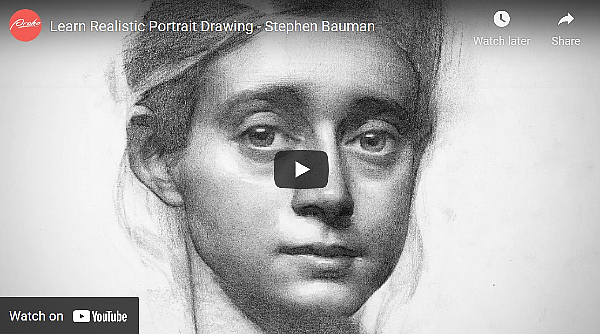
Stephen Bauman is a classically trained artist and has a very academic approach to his art. This guy knows his stuff and he’s a very good tutor
I’ve got a few articles related to this that are worth checking out:
- Are Drawing Books Worth It? Can You Learn From Books
- Are Proko Courses Worth It? A Review – Pros and Cons
- Is Skillshare Worth It? The Pros and Cons for Creatives
- Are Drawing Tablets Worth it? Pros and Cons Guide
- Is The Procreate App Worth it For Beginners? Get the Facts
- 25 Platforms for Artists to Sell Their Art Online and Make Money
- Is Print on Demand Worth it? The Pros and Cons for Creatives
PIN THIS


Hi, I’m Kevin Hayler
I’ve been selling my wildlife art and traveling the world for over 20 years, and if that sounds too good to be true, I’ve done it all without social media, art school, or galleries!
I can show you how to do it. You’ll find a wealth of info on my site, about selling art, drawing tips, lifestyle, reviews, travel, my portfolio, and more. Enjoy