

I first came across spirit animals when I was selling my wildlife art from a market stall. The notion that anyone would buy an art print based on its spiritual symbolism had never occurred to me before.
This was a whole new avenue of approach for me, and I’ll be honest here, I was looking at it from a sales point of view. Spirit animals are a sub niche of animal art and I could tap into that symbolism to find new buyers.
Why not?
Spirit animals, for those who might be scratching their heads, are animals and birds deeply rooted in many indigenous cultures. They’re like spiritual guides, representing qualities we either possess or aspire to.
These beliefs have crossed over into our modern pick ‘n mix culture.
It’s not for me to judge the merits of this trend. The truth is, many people find comfort and strength in their adoption of these symbols and it’s irrelevant whether I hold the same convictions.
Simply put, there is a group of people who want spirit animals to be part of their life and I for one have no problem with supplying the imagery.
With that in mind, and you know where I’m coming from, I make and sell wildlife art, and this post covers some of the more iconic animals that people love and adopt as their spirit animals. and subsequently, buy.
Let’s start
11 Iconic Spirit Animals People Love
I’ve chosen the following 11 examples of spirit animals that have mainstream appeal. I could’ve added more, but they are so niched down and specialized that I don’t know if they have enough fans.
The Wolf
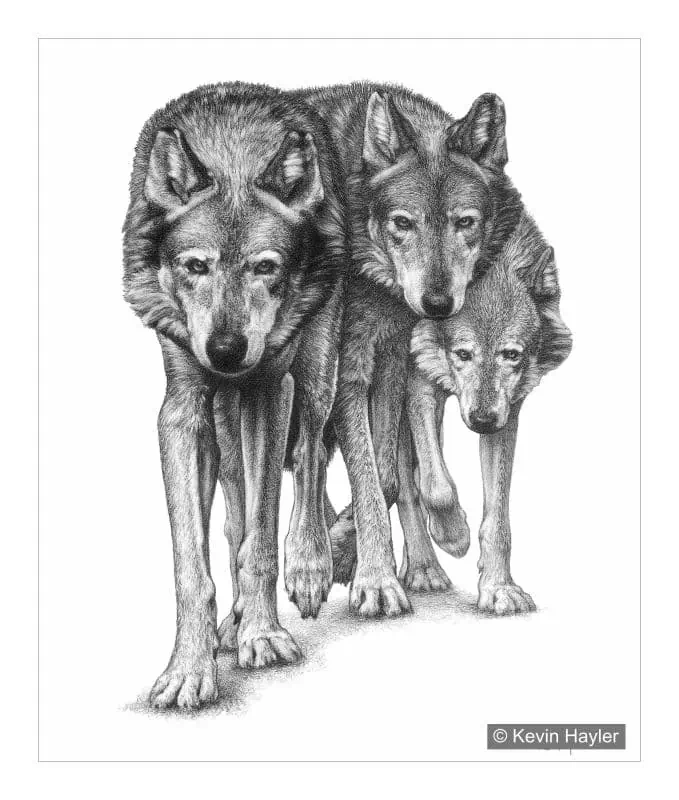
There is no doubt in my mind that you could make a living just with wolf art and the symbolism it represents. In fact, it’s such an iconic emblem it has become a cliche. Think T-shirts and cheesy posters.
Set that aside, wolves have a deep cultural resonance and they are number one on my list for a reason. They have a primeval impact that goes back into our ancient past.
In ancient cultures, the wolf was often seen as a guide, representing loyalty, teamwork, and intuition. Norse mythology revered the wolf, with Odin accompanied by wolves Geri and Freki.
Native American traditions view the wolf as a teacher and pathfinder.
In modern contexts, the wolf symbolizes freedom, instinct, and connection with nature. However, it also carries connotations of threat in some cultures, as seen in fairy tales like “Little Red Riding Hood.”
In contemporary spirituality, the wolf is often invoked for its strong intuition and social bonds, representing the balance between individual strength and community support.
That’s the spin. In fact, most of my sales are to men who see themselves as lone wolves. Make of that what you will.
The Lion

The lion has a strong symbolic role across many cultures. In modern contexts, the lion often represents courage, assertiveness, and leadership. The concept of “having the heart of a lion” reflects the animal’s association with bravery and strength of character.
In my experience, my lion portrait is bought as a ‘Dad’ gift. Indeed I called it ‘Head of the Family’ to reflect the traditional male role. I must add, that it’s mainly bought tongue-in-cheek and with a heavy dose of irony.
In popular culture, from heraldry to sports team mascots, the lion represents strength, pride, and nobility. There are lion images everywhere. My lion portrait is often bought to be copied as a tattoo.
The lion is well-represented in religion. Biblical references, such as the “Lion of Judah,” associate the lion with divine power and prophecy. In Hindu tradition, the goddess Durga rides a lion, symbolizing power and divine protection.
In ancient Egyptian mythology, the lion-headed goddess Sekhmet embodied both destruction and healing. And let’s not forget the Zodiac.
In Greek mythology, the constellation Leo is tied to the Nemean Lion, a fearsome beast defeated by Hercules as one of his twelve labors. This powerful symbol has carried through to modern astrology, where Leo embodies strength, bravery, and regal authority.
Conservation efforts have also made the lion a symbol of wild Africa and the importance of preserving natural habitats.
The Bear

I sales terms the popularity of bears is mostly concerned with brown bears. That may be related to the shared cultural and historic experiences of Eurasian and North American cultures where brown bears predominate.
Many North American Tribes revere the bear. Once widespread across the plains, grizzly bears appear in the legends and folklore of native Americans and represent wisdom, leadership, and healing.
Bears are known for their fearless ability to carry on fighting when wounded, leading to a belief that bears can heal their own wounds. They represent supreme courage.
Ancient Norse traditions associated the bear with the god Odin, representing the warrior spirit. The Vikings had the concept of ‘Berserkers’ These were warriors who turned into bears in battle.
In Celtic lore, the bear symbolized power and sovereignty. Modern interpretations often view the bear as an emblem of introspection and personal power.
In New Age spirituality, the bear is often invoked for grounding, courage, and connecting with Earth’s energies. The notion of ‘Mother bears’ arises as fierce protectors of their offspring.
The bear’s ability to stand upright has long fascinated humans, contributing to its symbolism of bridging animal and human realms. Conservation efforts have also made the bear an icon of wilderness preservation and respect for nature.
The Eagle

The Eagle represents freedom and power. It has a masculine appeal. In my experience, women are less attracted than men, but they buy eagle images for their partners.
I drew this portrait after multiple requests only to discover that most people want an eagle with its wings spread out! You can’t win.
It’s worth noting that eagles are usually depicted as ‘Bald Eagles’ in commercial art, no doubt because of the emblematic power it represent in North America.
In ancient cultures, from Rome to Native American tribes, the eagle was revered as a messenger of the gods and a symbol of divine power. Its ability to fly at great heights has long been associated with the spiritual realm.
In Christian iconography, the eagle represents John the Evangelist and divine inspiration.
Modern interpretations often view the eagle as a symbol of freedom, perspective, and national pride, as seen in its use as a national emblem for many countries, including the United States.
In spiritual terms, the eagle is invoked for its sharp vision, both literal and metaphorical, representing clarity of thought and the ability to see the bigger picture.
Its hunting prowess symbolizes focus and the achievement of goals.
Owls

In purely commercial terms, owls are favored by older women, or at least bought for older women. There is age and wisdom symbolism at play.
Owls are also associated with Harry Potter, and that’s how deep we are!
In ancient Greek mythology, the owl was associated with Athena, the goddess of wisdom, establishing its enduring connection with knowledge and insight.
Many Native American traditions view the owl as a powerful spirit guide and keeper of sacred knowledge.
In modern contexts, the owl often symbolizes intelligence, intuition, and the ability to see what others cannot. Its ability to turn its head nearly 360 degrees has made it a symbol of perspective and the ability to see beyond the obvious.
In popular culture, the owl frequently appears as a wise mentor figure, reinforcing its association with knowledge and guidance.
New Age spirituality often invokes the owl for developing psychic abilities and navigating life’s mysteries.
The Fox

In the British context, I’m British, the fox holds a special place. In one way, it is one of nature’s great adapters. It now thrives in our cities and is beloved by many. It represents a resourceful, cheekiness.
On the other hand, many country folk see foxes as the enemy and vermin number one and must be controlled. There is an obvious urban/country clash and as far as hunting is concerned, a class issue.
The fox has many faces, and in my experience, foxes are loved far more than hated.
In Japanese folklore, the kitsune (fox spirit) is a shape-shifter, often depicted as intelligent and magical.
Native American cultures often portray the fox as a trickster, but also as a wise and helpful creature.
In Celtic mythology, the fox is associated with cunning, wisdom, and familial loyalty. The phrase “sly as a fox” in modern language reflects the enduring perception of the fox’s intelligence and craftiness.
In spiritual contexts, the fox is often invoked for its ability to find creative solutions and adapt to challenging situations. Its nocturnal nature and red coat have also linked it to passion and intensity in some traditions.
In contemporary symbolism, the fox often represents quick thinking, resourcefulness, and the ability to see through deception.
A Stag Deer

Mostly a male icon, a stag’s head is the epitome of masculinity. It has a raw testosterone-fueled appeal and is widely associated with fertility and sexual energy. Just think of stag parties and male excess.
It was not always so egalitarian.
The connection between stags and royalty, particularly through hunting, dates back centuries and is deeply rooted in European culture.
The stag was seen as a noble and elusive animal, symbolizing kingship, honor, and power. Royal hunts, especially for stags, were not just about sport but also a demonstration of a ruler’s strength and authority.
In medieval Europe, the stag hunt was reserved for the nobility, reinforcing the idea of social hierarchy. Kings and nobles engaged in these hunts to showcase their prowess, often seen as embodying the virtues of leadership.
The “Hart,” a mature stag, was especially prized, and hunting one was seen as a mark of royal privilege. This practice reinforced the stag’s association with regal qualities and dominance.
In Celtic mythology, the deer is associated with fairy realms and supernatural beings, often serving as a guide between worlds.
Many Native American cultures view the deer as a messenger of spiritual wisdom and a symbol of sensitivity and intuition.
In Christian iconography, the deer is sometimes associated with piety and devotion.
The Dolphin

Dolphins with their apparent “smile” and friendly demeanor towards humans have cemented their place in popular culture as symbols of happiness, freedom, and the carefree spirit of the ocean.
They represent all that is best in nature, true or false, it hardly matters.
In fact, they are so emblematic of peace, harmony, and love, that they’re often chosen as nursery decor. That makes it tricky for artists wishing to make quality dolphin art without being cheesy.
But the love and respect for dolphins go back into history. In ancient Greek mythology, dolphins were associated with Poseidon and Apollo, often seen as helpers and saviors of humans at sea.
Many indigenous cultures, particularly those of island nations, view dolphins as guardian spirits or reincarnated ancestors.
In modern spiritual practices, dolphins are often invoked for their perceived qualities of joy, playfulness, and emotional intelligence.
Their complex social structures and communication abilities have made them symbols of community and effective interpersonal relationships.
Swimming with dolphins is high on many peoples ‘bucket lists’ of things to do in life, and the concept of “dolphin therapy” in alternative medicine reflects the belief in the dolphin’s healing and calming presence.
The Elephant

Another iconic animal that is so popular, it’s a niche unto itself. If you want to sell art and illustrations, draw a few elephants.
Some women adore elephants, to the point that they will buy anything elephant-related. It’s not hard to see why.
Elephants are associated with intelligence, emotional depth, and loyalty. They are family orientated and life is matriarchal. Males are ever present but it’s the females that look after the clan. They have the knowledge and experience to see the family through bad times.
Of course, women empathize with elephants.
In cultural terms, the elephant, with its immense size and gentle nature, stands as a powerful symbol across many cultures and spiritual traditions.
In Hinduism, the elephant-headed god Ganesha represents wisdom, prosperity, and the removal of obstacles.
African traditions often view elephants as wise chiefs, embodying strength and memory. . The elephant’s renowned memory has linked it to ancestral wisdom and the importance of honoring the past.
In Buddhism, the white elephant is a symbol of mental strength and regal power.
In spiritual terms, the elephant is invoked for its grounding presence, wisdom, and ability to overcome obstacles with gentle persistence.
On a lighter level. An elephant with a raised trunk is supposed to bring good luck. Don’t ignore superstition if you want to make art that sells!
The Tiger

I’ve seen many wild tigers in my life and it’s a thrill every time. Tigers have charisma that even lions can’t match. Just hearing the alarm calls of jungle animals as a tiger glides somewhere through the forest is enough to make the hairs on your neck stand up.
All my encounters were in India and Hindu mythology associates the tiger with divine power, often depicted as the mount of goddess Durga.
In Chinese culture, the tiger is one of the four sacred animals, representing strength, bravery, and warding off evil spirits. It is one of the 12 symbols of the Chinese zodiac and those born in the year of the tiger are also competitive, unpredictable, and confident.
Sadly, tigers are so mythologized in China culture for their strength and power, their body parts are used in Chinese medicine in the belief that these qualities can be passed on to people.
It;s not just China, many Southeast Asian cultures revere the tiger as a symbol of royalty, spiritual authority and fierce drive. The ‘Tiger’ economies are aptly named.
In modern contexts, the tiger often represents passion, sensuality, and personal power. The phrase “tiger mom” reflects the animal’s association with fierce protection and ambition.
Spiritually, the tiger represents courage, assertiveness, and overcoming fears. The tiger’s solitary nature and stealth have also linked it to introspection and the hidden aspects of one’s personality.
The Jaguar
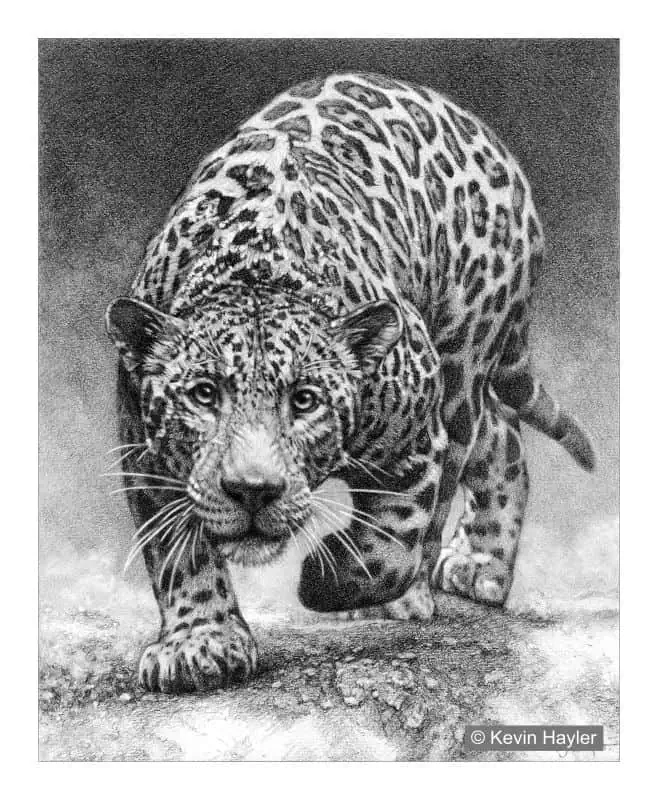
It was my drawing of a powerful jaguar that initially led to my awareness that (some) people have spirit animals.
If I had not traded face-to-face with my customers and relied on online sales, I would never have known why people buy my art. It gave me invaluable insights into what motivates the public.
The jaguar, with its immense strength, holds a revered place in the spiritual and symbolic traditions of the Americas. In Mayan mythology, the jaguar was associated with the night sun and the underworld, representing transformation and spiritual journey.
Many Amazonian cultures view the jaguar as a symbol of power, ferocity, and valor. The Aztecs had ‘jaguar warriors’, elite fighters who would wear jaguar skins and masks into battle.
Shamanic traditions often invoke the jaguar spirit for healing and protection. The jaguar’s ability to see in the dark has linked it to the ability to navigate through life’s mysteries.
In modern spiritual practices, the jaguar is often called upon for its strength and courage.
Its role as an apex predator has made it a symbol of confidence and assertiveness and an icon for rainforest preservation.
11 Spirit Animals: Final Thoughts
There you have it, 11 of the best, so to speak. These are all iconic animals in their own right and I’ve listed these for fun.
Whether you connect with these animals for their symbolism, cultural significance, or simply because they find them beautiful, there’s no denying their appeal.
At the end of the day, I’m not here to debate spiritual beliefs. I’m here to capture the essence of these magnificent creatures and offer them to those who find meaning in their symbolism.
If my work can touch someone’s life, even in a small way, then I’m doing something right.
I can help if you want to sell your artwork

Has this post been enjoyable? If so, you may like to read the following articles:
- 12 Wildlife Art Bestsellers (Use These Subjects to Make Money)
- The Wildlife Drawings of Kevin Hayler
- 25 Realistic Animal Drawings
- How to Start Drawing Wildlife and Become a Wildlife Artist
- 6 Realistic Elephant Drawings in Pencil
- 7 Bird Art Bestsellers: Best Wall Art Selling Guide
- 9 Farm Animal Art Bestsellers: Home Decor That Sells!
- How to Draw Realistically: 11 Realistic Drawing Tips
- How to Draw a Realistic Giraffe: Step by Step and Get Great Results
- 9 Ways of Framing on a Budget You Need to Know!
Pin This For Later
