

Wouldn’t it be great to have a dream art studio where you could escape the outside world and get on with your artwork, free of interruptions and with everything to hand.
I must confess, despite having been a professional illustrator for over 20 year, I have never had such a space, but that has never stopped me dreaming.
These studio ideas are for fun. They’re mockups designed to show how a creative life could look in different settings. Think of them as a way to explore what a dedicated workspace might feel like if you could design it exactly how you wanted.
While some of these setups are out of reach, they still serve as inspiration for what’s possible. They’re about the idea of having a place that’s truly your own, a studio room where you can focus entirely on your work.
The following descriptions walk through seven types of art studios. Each one offers a unique look at how a studio can be integrated into different settings.
Disclaimer: When you buy something via my affiliate links I earn from qualifying purchases and sometimes earn a commission, at no extra cost to you. I am an Amazon Associate among others. I only recommend trusted sites.
A Conservatory Art Studio

Imagine you’re stepping into a space where the outside world and your workspace feel like the same thing. It’s an old conservatory, framed in slim, white-painted metal that’s seen a bit of wear over the years. Perfect.
Because it’s almost entirely glass, the light doesn’t just come from one window. It fills the whole room. It’s soft and constant, the kind of light that makes it easy to see exactly what you’re doing without any harsh glare.
You can even work in the dead of winter and enjoy the sun.
Underneath your feet, the pale stone tiles are worn with age. They show faint marks where your chair has moved or where a stray drop of paint hit the floor. Your main workspace is a long wooden table that’s clearly been used for a long time.

You’ve got your jars of water and brushes within arm’s reach, and your current painting is clipped down so the warmth doesn’t curl the paper.
In the corner, you’re working on a botanical study and it’s hanging on the easel. You’re surrounded by plants in terracotta pots that aren’t there just for decoration. They’re there to be studied and painted too.
It feels like a place where you actually get things done. You can sit in your chair, look at the leaves catching the light, focus on your work, and lose yourself.
This drawing is one of mine. It’s hand-drawn and based on my own photo references taken in Assam in Indis

A Country Farmhouse Art Studio

Imagine you’re walking into a room with a low, beamed ceiling and aged oak that’s settled over time. The walls have a soft chalk tone, showing a few scuffs here and there that prove this is a place where things actually get made.
A large window on your left brings in a steady, cool light. It’s the kind of light that doesn’t change much during the day, which is perfect for keeping your colors consistent.
Outside, you can see the blurred greens of fields and hedgerows, but they aren’t sharp enough to pull your focus away from the canvas.
Your main worktable is solid wood and sits right in front of that window. Its surface is a history of past projects, covered in scratches and stains from earthy greens and ochres. Jars of brushes and a ceramic palette with layers of dried paint stay within easy reach.

To the right, your easel holds a painting of a local hedgerow. You’ve got other canvases leaning against the wall that fit the quiet feel of the room. The wide plank floors are worn down and show exactly where you stand most often when you’re working.
Open timber shelves along the back wall hold your sketchbooks and supplies. Everything’s visible and easy to grab, but it isn’t styled for a photo. It’s just organized for use.
When you need a break, there’s an old farmhouse chair in the corner with a comfortable cushion. You can sit there, listen to music or daydream, surrounded by the muted tones and the smell of wood and paint. It’s a simple, functional space that’s built for the long haul.
Repurposed Garage Art Studio

This time you’re stepping into a converted garage that’s been stripped back and turned into a dedicated workspace. The ceiling is higher than what you’d find in a house, with exposed joists painted a soft white. It feels open and industrial, giving you plenty of room to breathe and move around.
The far wall has a large window where the garage door used to be, letting in a broad, steady beam of light. This creates deeper shadows than a standard room, highlighting the textures of the painted brick walls and the sealed concrete floor.
You don’t have to worry about being precious here; the floor is already covered in paint splatters and scuffs from years of heavy use.

In the center of the space, there’s a sturdy worktable made from thick timber. It’s a real workbench, marked with cuts and stains from countless projects. Your brushes and palettes are laid out across the surface, and there’s enough room to have several boards or sheets of paper going at the same time.
Since you’ve got the extra height and floor space, your easel is a full-sized version that faces the light. You can work on much larger landscape studies here than you could in a smaller room. Large canvases lean against the walls, waiting for their turn, and metal industrial shelving keeps all your supplies visible and within reach.
There’s a second bench along the wall for prep work, like cutting paper or stretching canvas. It’s just as worn and practical as the rest of the studio.
This isn’t a place for sitting and overthinking. It’s a scaled-up, functional environment where you can spread out, and get your hands dirty.
Another one of my drawings. This is a pet cockatoo I saw while I was on a diving trip in Sulawesi, Indonesia.

Barn Conversion Art Studio

Imagine you’re standing in a wide, open space with a high pitched ceiling and heavy wooden beams running overhead. The wood is dark and rough, showing its age, while the walls mix exposed stone with whitewashed sections.
It gives the whole room a sense of history and scale that you just don’t get in a modern building.
At one end, tall windows or large doors let in a broad sweep of natural light. Because the room is so deep, the light is strong where you need it but softens into a gentle glow toward the corners. You’re walking on wide timber planks that are worn down from years of use.

Your main worktable is solid and heavy, positioned right under the best light. It’s a real piece of furniture built for hard use, covered in the usual scratches, cuts, and dried paint stains. You’ve got your jars of splayed brushes and a thick palette sitting right in the middle, surrounded by sheets of paper and boards ready for your next move.
Since there’s so much room, you’ve got a full-size wooden easel angled toward the windows. It’s holding a large landscape study, and more canvases are leaning against the stone walls behind it.
Long wooden shelves run along the side, keeping your sketchbooks and supplies visible and easy to grab whenever you need them.
There’s even space for a second bench to handle your tools and extra materials. The height of the ceiling means the room never feels cramped, even when you’re working on big projects. It’s an open, grounded place that feels like it’s meant for serious, daily work.
Romantic French Style Art Studio

Imagine you’re standing in a tall, rectangular room that has that classic, lived-in feel. The ceilings are high with simple plaster details, and the walls are a warm off-white with faint marks where things have been moved around over the years.
Two tall windows stretch nearly to the ceiling, letting in plenty of light that’s softened by thin linen curtains. Outside, you can just make out the blurred shapes of neighboring buildings and a narrow street.

The floor is old herringbone parquet, worn smooth from years of footsteps, with a few paint scuffs near the windows where you do most of your painting.
Your vintage drawing table is made of solid wood and sits at an angle to catch the best light. The surface is a bit of a mess in the best way, covered in tape residue, cut marks, and stains from muted paint. You’ve got your sketchbooks and jars of pencils and brushes all mixed together, right where you can reach them.
To the side, an easel holds a loose study of tree branches, while other canvases lean directly against the wall. Some are turned around, showing their raw wooden backs. There’s a low cabinet for supplies, but its top is usually covered in more sketchbooks and folded cloths.
A single chair sits in the middle of the room with a coat draped over it, and an open sketchbook lies on the floor nearby. It feels like a place where you can just start working whenever the mood strikes, without worrying about everything being perfectly in its place.
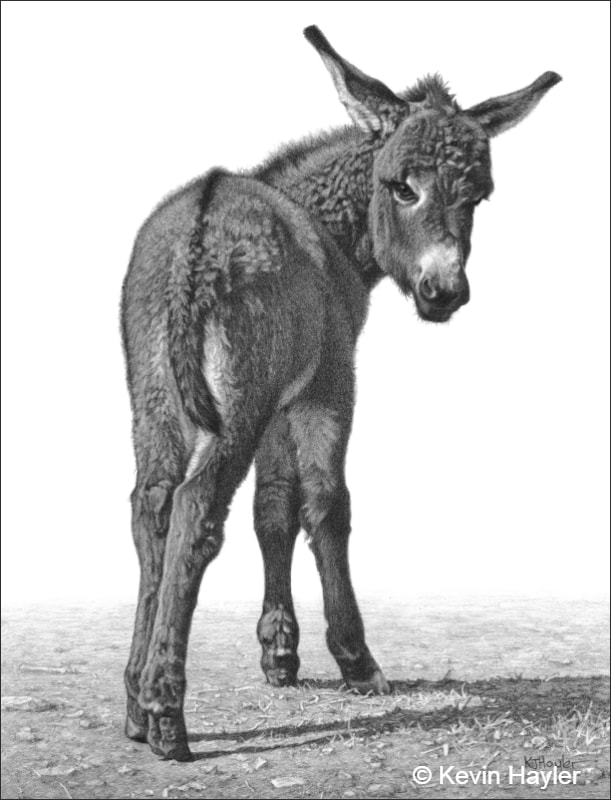
I saw this domestic donkey foal in a village in Ethiopia.
Garden Outbuilding Art Studio

Imagine you’re walking into a small, quiet outbuilding tucked away at the back of a garden. It’s a separate little world where the air feels still and the noise from the house doesn’t reach.
The walls are made of vertical wooden boards painted a soft off-white, though you can see the grain of the wood peeking through where the paint has worn down over time.
Straight ahead, a single window frames a view of the surrounding greenery. The light is steady and natural, softened by the trees outside.

Your worktable sits right in front of that window, made of thick, sturdy timber that’s taken plenty of hits from knives, brushes, and spilled paint. You’ve got your jars of brushes lined up along the back edge, some stained dark from a long day’s work.
To your right, a compact easel is angled to catch the light. It’s holding a woodland scene that’s still in progress, while other boards and canvases lean against the timber walls.
Open shelves are fixed directly to the walls, holding your sketchbooks and supplies. It isn’t a showroom; it’s a workspace where everything is easy to grab and nothing is there just for decoration.
With the door half-open, you can see a sliver of the garden, but the focus stays inside. It’s a practical, personal spot that’s built for one thing: getting lost in your work without any distractions.
Scandinavian Minimalist Art Studio

Imagine you’re standing in a quiet, open room where there’s almost no visual clutter to pull at your attention. The walls are a flat, matte white, showing only a few faint marks where you’ve pinned up sketches and taken them back down.
Because the ceiling is a bit higher than usual, the whole space feels calm and airy, like there’s plenty of room for your thoughts to breathe.
A large, simple window sits directly ahead, letting in a cool, even light. You’ve got a thin blind pulled halfway down to keep the glare off your paper, but otherwise, there’s nothing blocking the view.

The floor is made of pale wooden planks that are mostly clear, except for a few paint spots and light scratches near your workspace.
Your main desk is a long wooden surface that’s kept mostly tidy. It isn’t empty, but everything has its place, a neat stack of sketchbooks, a cutting mat, and your jars of brushes and pencils.
It’s the kind of setup that lets you start working immediately without having to move a bunch of stuff out of the way first.
To the side, your easel is between both windows, holding a simple study of branches or grasses. You’re sticking to a restrained palette, and the other canvases leaning against the wall follow that same quiet, nature-based theme.
There’s just one plain wooden chair and simple low shelves for your extra supplies. Everything is spaced out and easy to reach. It’s a minimal, focused environment where nothing unnecessary gets in the way of what you’re trying to create.
Dream Art Studio Ideas: Final Thoughts
These “Dream Art Studio” concepts are really about one thing: the idea that your workspace should support the way you want to create. Whether it’s a wide-open barn or a quiet corner in a garden outbuilding, a dedicated space makes it easier to focus on the work itself.
While these mockups explore the visual side of an artist’s life, there’s also the practical side of actually getting your work out into the world. Setting up a studio is a big step, but figuring out how to handle the business side is just as important if you want to keep creating for the long haul.
If you’re looking for a straightforward way to start moving your work from the studio to a buyer’s home, I’ve put together something to help. You can grab my ebook, ‘Selling Art Made Simple’, which breaks down the process into clear, manageable steps. Have a look.

if you like these studio ideas you will probably like these too:
- 7 Artist Home Studio Ideas to Dream About
- 7 Cozy Art Studio Ideas For This Fall
- 7 Cozy Hobby Room Ideas For Keen Artists
- 7 Home Art Room Ideas for Acrylic Painters
- 7 Home Art Studio ideas for Watercolor Painters
- 7 Home Studio Setup Ideas for Senior Artists
- 8 Small Art Studios at Home
- 10 Home Art Studio Ideas For Your Spare Room
Pin This


Hi, I’m Kevin Hayler
I’ve been selling my wildlife art and traveling the world for over 20 years, and if that sounds too good to be true, I’ve done it all without social media, art school, or galleries!
I can show you how to do it. You’ll find a wealth of info on my site, about selling art, drawing tips, lifestyle, reviews, travel, my portfolio, and more. Enjoy