

Greeting people at your art booth can feel awkward at first, but it’s a skill you need to learn if you want to sell your work.
You don’t have to be an extrovert. I’m not, and yet I spent over 20 years selling my art prints face to face. In this post, I’ll show you exactly how I approach it, based on all those years of experience.
You’ll learn what to say, how to act, and how to make your booth feel welcoming. If you want to make more sales, keep reading.
First Impressions: A Friendly Smile
A friendly smile is the most powerful tool you’ve got, and it costs nothing. It sounds obvious, but you’d be surprised how many artists, or anyone in service, forget to use it.
I’m writing this in a cafe and I got ignored by everyone for the first couple of minutes and they are not busy. That’s a bad customer experience. We’ve all been there.
A quick, relaxed smile can make all the difference. It’s not about grinning at everyone like a maniac, it’s about offering a brief, natural smile that says “I see you” without putting anyone under pressure.
If you are occupied with something, or someone, it acknowledges the visitor.
I think of it as a small gift. Just a fleeting moment of warmth, casual enough not to seem too eager, but real enough to register. You only get one chance to make a first impression, and a smile paired with soft eye contact is often enough to make someone stop and take a proper look.
You don’t need to say a word. Your body language does all the work. This is the least you should do, and sometimes that little moment is all it takes.
People might not have planned to stop, but a smile alone can tip the balance and make them want to stop and see what you are doing.
You’ve got to remember that we live in a lonely world in the West and these tiny pleasentries go a long way. Your company might make a difference to their day.
But what if they don’t smile back? That’s fine too. Some people just don’t respond, and it doesn’t mean you’ve done anything wrong. The point is to offer a moment of welcome without expecting anything in return. It sets the tone for your whole stall.

Breaking the Ice: Naturally
A smile is your first bit of communication, and more often than not, it’ll be followed by a greeting. This is your chance to break the ice in a relaxed, friendly way that doesn’t make anyone feel cornered.
It needs to feel casual and unforced, like something you’d say to a neighbour, not a customer.
My approach is what I’d call ‘attentive indifference‘. I want to show I’m open to contact, but I don’t want to come across as desperate for it.
I’ll say something like “Hi”, “How’s it going?” or “Morning” with a smile, then go straight back to whatever I’m doing. That might be drawing, sorting through prints, rearranging the table, or even cleaning something that didn’t need cleaning.
In truth, it doesn’t matter what the task is. What matters is that I look content and occupied. That way, the interaction feels natural and not like a setup for a pitch. I’ll even use my phone now and then. I never take calls, but browsing casually works just fine.
It lets me give the impression that I’m busy, but not too busy. I’m completely aware of what’s going on, and if someone looks interested, I can drop everything in a heartbeat.
But until that happens, the message I’m sending out is simpl, this is a safe space, and I’m not going to pounce.
I’ll bide my time before I follow up further. I’ll read the situation. How are they standing? Are they touching the stock? Are they reading the captions? All these things give a message.

The Casual Follow Up
I don’t rush in after the first greeting. I’ll bide my time and read the situation. How are they standing? Are they touching the stock, flicking through the prints, reading the captions? Are they chatting to a friend about the work? All of these small signs tell me something.
I’m gauging their level of interest and waiting for the right moment to follow up. It’s never forced. I’ll look for a small opening where I can drop in a quiet comment or a casual suggestion, then go straight back to what I was doing. The key is to be subtle and back off instantly.
There’s a lot of nuance to it, and the timing takes practice. Over time, you get better at spotting when someone is genuinely engaged. That’s when I might say something like, “There are more in the folder if you want to see them all,” or, “Have you read the captions?” Nothing pushy, just enough to keep the interaction going.
It has to feel like an aside, not a sales line. Just a passing remark as you continue with your task. That keeps the mood relaxed and gives them space to respond on their own terms.
Starting a Conversation
Once the ice is broken and someone shows a bit of interest, I’ll look for a chance to start a light conversation. This is the warm-up. You’re not selling at this point, you’re just getting a feel for the person and building a bit of rapport.
The best way to do that is to ask questions. Small, easy ones that anyone can answer without thinking too hard. I sell animal art, so I might ask, “Do you have a favourite animal?” or say something like, “I saw that lion when I was on safari.” Sometimes I’ll ask, “Do you like to draw?” These are soft openers. They’re not intrusive, just gentle teasers that invite a response.
You’re casting a line to see if they’ll bite. A curious person might pick up on something you’ve said and take the lead from there. If not, I might follow up with something simple like, “Have you ever been on safari?” or “What sort of things are you into?” I’m just trying to find a point of connection.
The goal isn’t to sell anything right now. It’s just to have a chat. When you’re talking naturally, it relaxes the situation and puts people at ease. That’s when they open up, and that’s when they’re far more likely to buy.
Telling Stories: Not Making a Pitch
Once someone relaxes and starts asking questions, you’ve reached a good place. Now it’s time to sell yourself, not in a pushy way, but by sharing the story behind your artwork. The general public are far more interested in the why than the how.
PRO TIP: People who ask about your art kit or working methods are artists looking for free advice. They are rarely print buyers so I don’t prioritze them if there are other customers to attend to..
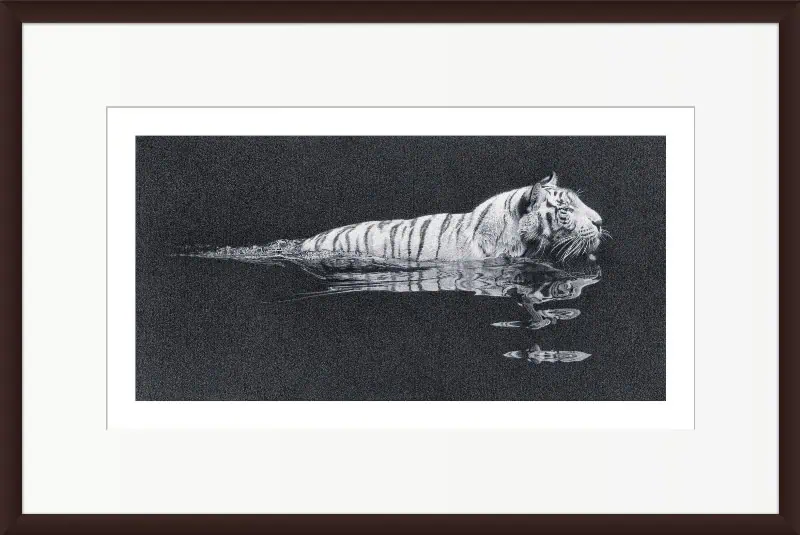
If my prospect asks about a piece, I keep it personal. I might explain where I saw the animal, what caught my attention, or why I chose to draw it in the first place. Maybe it was the pose, or the character in its eyes.
I like to mention where I saw the subject as many have a travel story attached. I sell the dream, or if my customer has been to the same place, we share the experience.
These details turn a drawing into something much more memorable.
That conversation becomes part of the artwork for them. When they get home, they’ve got a good story to tell. It’s not just a print, it’s your print, and they met the artist and heard your story first-hand.
That’s what they share with friends and family when they show it off.
They’re buying a piece of your life and taking it home with them. That kind of connection doesn’t come from a sales pitch. It comes from being genuine.
The Art of Selling Yourself
Selling art isn’t about clever lines or closing tactics. It’s about being authentic. The best salespeople are genuinely friendly, and you can’t fake that. People can spot it a mile off.
Remember, art is a discretionary spend. Nobody needs what we’re selling. It’s not food or rent or fuel for the car. So if someone is going to spend their hard-earned money on your work, there has to be something extra in it for them.
How people feel after meeting you is what matters most. If they had a good experience, if they enjoyed the chat, if they felt seen and appreciated, they’ll walk away feeling positive. That feeling gets attached to the art. It becomes part of the reason they bought it.
The people who come back and buy from you again aren’t doing it because your art magically improved. They’re doing it because they liked you and came back for more.
Your best buyers are repeat customers, and you earn their trust by being decent, honest, and kind.
Good salespeople know how to talk, but great ones know how to listen. Take a genuine interest in the people who stop at your art booth. Ask questions, pay attention, and remember the faces that return. That’s the art of selling.
Greeting People at Your Art Booth: Final Thoughts
Selling your art face to face from an art booth isn’t about having all the right sales jargon, it’s about creating a space where people feel welcome and are put at ease.
You’ve learned how a simple smile sets the tone, how to break the ice without pressure, and how to build a conversation that feels natural.
You don’t need to force anything. With a bit of awareness, a few well-placed questions, and a genuine interest in people, you’ll make better connections, and more sales.
Like anything, it gets easier with practice.
If you want to take things further I have written it all down. You can learn the tricks of the trade. This is everything I’ve learned selling my art prints from a market stall for over 20 years.
If you need something to follow, I’ve got you covered.

These are related posts that you’ll find interesting:
- Selling in Art Fairs (5 Tips You Can’t Afford to Ignore)
- Cheap Art Display Panels: Make Your Own For Art Shows
- 10 Best Ways to Sell Your Art Locally: Mega Guide
- How to Write an Artist About Me Bio: In 4 Easy Steps
- 12 Wildlife Art Bestsellers (Use These Subjects to Make Money)
- How to Use Artist Business Cards: 6 Tips For Artists
- How to Prepare For an Outdoor Art Fair: Tips for Success
- Can You Copy Art and Sell a Painting of a Painting? I Found Out
- How to Build Trust With Customers: 6 Ways to Sell More Art
- How to Name Your Artwork: Find a Title That Sells
PIN THIS


Hi, I’m Kevin Hayler
I’ve been selling my wildlife art and traveling the world for over 20 years, and if that sounds too good to be true, I’ve done it all without social media, art school, or galleries!
I can show you how to do it. You’ll find a wealth of info on my site, about selling art, drawing tips, lifestyle, reviews, travel, my portfolio, and more. Enjoy