

Struggling to improve your drawings? This roundup offers 14 drawing techniques, tips and tricks to help you improve your drawing skills
Each tutorial is tailored to solve a specific problem – creating depth, mastering textures, learning foundational skills, and so on. Every item links to an article that provides detailed guidance to help you refine your drawing techniques and achieve better results.
Let’s jump straight in.
1. 9 Ways to Stop Pencil Shine in a Drawing

Summary:
This article offers nine practical techniques to reduce or prevent pencil shine, a common issue caused by excessive graphite buildup. It includes tips like using harder pencils, layering lightly, and employing blending tools strategically.
Additionally, it explains how to achieve a matte finish with fixatives or alternative materials. Aimed at improving both the appearance and durability of drawings, this guide is ideal for artists looking to refine their sketching technique.
Are you ready to learn how to prevent pencil shine from ruining your work?
2. 14 Ways to Make Your Drawings Interesting

Summary:
This post shares 14 innovative tips to enhance the visual appeal of your drawings. From experimenting with different perspectives and adding narrative elements to incorporating texture and contrast, these strategies encourage creativity and engagement.
Each suggestion is accompanied by examples and practical advice, making it a valuable resource for artists at any skill level.
This is a really useful article. Take your drawing skills to the next level, improve, and make your drawings more interesting
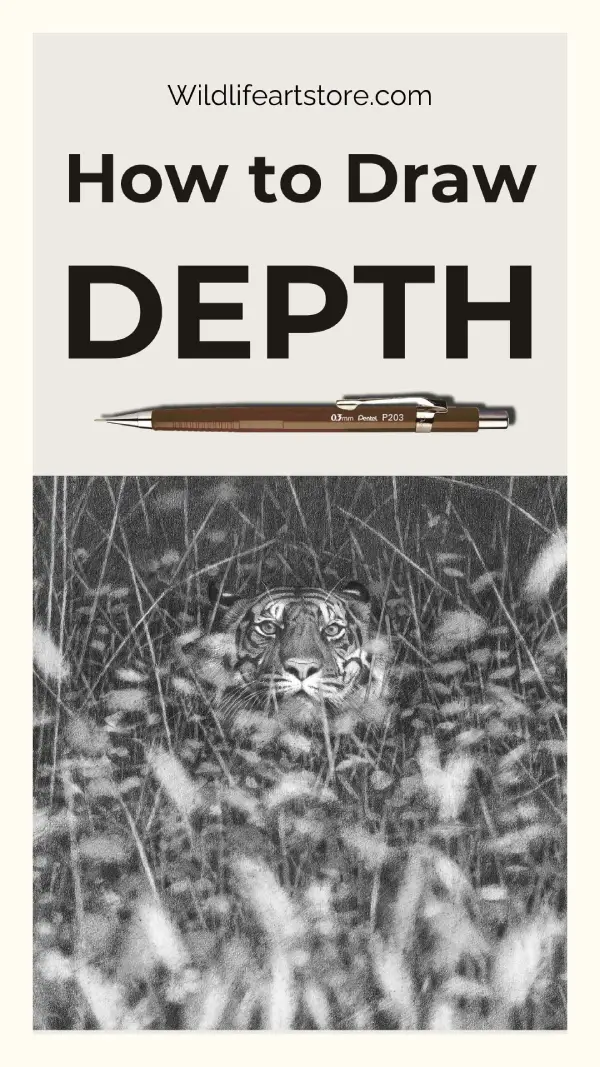
3. 7 Ways to Create Depth in Your Drawing and Succeed
Summary:
This article teaches artists how to create depth in their drawings using techniques like linear perspective, overlapping elements, and tonal contrast. It explains how to apply shading and highlights to convey a sense of distance and three-dimensionality.
Packed with practical tips and exercises, this guide is perfect for anyone wanting to add realism to their artwork.
Check out these 7 ways to create depth and see how it makes such a difference to the end results
4. How to Draw With Mechanical Pencils

Summary:
This post highlights the advantages of mechanical pencils, such as their precision and consistent line width. It provides tips on selecting the right lead grade, creating textures, and blending effectively.
The article also compares mechanical pencils with traditional pencils, offering advice on when and how to use each for different drawing styles.
Discovering these propelling pencils was a game-changer for me. I urge you to try drawing with mechanical pencils. You’ll be amazed.
5. Do You Need to Outline Drawings?

Summary:
This article discusses the role of outlines in artwork and offers insights into when they enhance a piece versus when they might detract from realism.
The guide also shares tips on experimenting with different outline methods, such as using lighter pencil marks for preparatory sketches or incorporating outlines as part of your final composition.
It explores stylistic choices, medium considerations, and subject matter to help artists, like you, make informed decisions about incorporating outlines into your work.
6. How to Draw a Forest Background the Easy Way

Summary:
This step-by-step guide simplifies drawing a forest background, covering drawing techniques for layering trees, adding foliage, and creating a sense of depth through tonal variation.
It also provides tips on incorporating light and shadow to evoke mood and atmosphere, making it an excellent resource for landscape and nature art enthusiasts.
Drawing trees in a landscape is not complicated if you follow these easy tips
7. The Basic Skills of Drawing: Learn to Draw For Beginner

Summary:
This beginner-friendly guide introduces foundational skills such as observing shapes, mastering proportions, and creating basic shading.
It offers step-by-step exercises to build confidence and improve technical abilities, setting the stage for further development as your skills improve.
I’ve added a great video by Stephen Bauman to help you visualize the basic drawing skills you need to acquire.
8. What’s the Best Angle For Drawing and Sketching?

Summary:
This article explores the optimal angles for drawing and sketching to enhance accuracy and comfort. It discusses the drawbacks of working on a flat surface, such as distortion and strain, and advocates for using a tilted drawing board or easel.
The guide provides insights into choosing the appropriate angle based on personal preference and the nature of the work, aiming to improve posture and the quality of the artwork.
Not many articles cover drawing at the right angle. Don’t skip it.
9. How to Draw Realistic Shadows in Pencil

Summary:
Mastering the depiction of light and shadow is crucial for creating realistic pencil drawings. This article covers different techniques for rendering lifelike shadows.
Learn about selecting appropriate pencil grades, layering tones, and understanding the interplay between light sources and object placement.
I also cover the importance of reflected light and how to accurately portray shadow edges to enhance depth and realism in your artwork.
Drawing realistic shadows is super important if you want to make sure your drawing looks 3D.
10. How to Draw Realistically: 11 Realistic Drawing Tips

Summary:
Achieving realism in drawing requires attention to detail and mastery of various more advanced techniques.
This article provides 11 expert tips to enhance the life-like quality of your drawings, covering aspects such as accurate proportion, effective use of reference photos, detailed rendering, and the importance of patience and practice.
By implementing these tips, artists can improve their work and acheive a more realistic and professional level.
Learn to draw realistically here
11. How to Draw Texture in Pencil: 7 Tips for Realistic Results

Summary:
Rendering texture convincingly can bring your pencil drawings to life. This article offers seven practical tips for depicting various textures, such as rock, tree bark, fur, and grass.
It emphasizes the use of different pencil grades, shading techniques, and the strategic application of erasers to create lifelike textures.
With guidance, you can learn to add texture and realism to your work by accurately portraying the surface qualities of different subjects.
12. Drawing Realistic Grass the Easy Way: For Beginners

Summary:
Drawing realistic grass can enhance the authenticity of your landscapes.
This beginner-friendly guide breaks down the process into simple steps, focusing on observing how grass grows, mastering appropriate pencil strokes, and creating depth through tonal variation.
I also introduce techniques like using eraser pens to add highlights and suggests ways to depict different types of grass effectively.
If drawing realistic grass mystifies you, read how to draw grass easily.
13. How to Draw White Lines in a Pencil Drawing: Do This…

Summary:
Incorporating white lines into pencil drawings can highlight intricate details and enhance realism to the maximum.
This article explores various techniques to achieve this effect, such as using indenting tools to create grooves that resist graphite, and utilizing eraser pens to lift graphite and reveal highlights.
By mastering these drawing methods, artists can effectively depict features like whiskers, fine hairs, or tiny light reflections in their work. This is one post you shouldn’t miss.
Learn to draw thin white lines here.
14. How to Draw Water in Pencil

Summary:
Capturing the fluidity and reflective nature of water in pencil drawings is a skill that will lift any artist’s work. This comprehensive guide breaks down the process into manageable steps, teaching how to observe and replicate the unique characteristics of water.
It covers key drawing techniques like creating soft gradients for calm water, using sharp contrasts for highlights, and illustrating ripples and reflections.
This article provides valuable tips on drawing water that will bring your art to life.
14 Drawing Techniques: Final Thoughts
There you have it. I have many more tips and tricks to help you along the way. These are 14 direct drawing tips that should help you to develop your drawing skills and see a marked improvement.
Please note that some of these hacks are only possible if you use the right tools. The good news is they are so inexpensive you might as well try them out.
These are my essential drawing materials:
- Pentel Mechanical Pencils 0.3mm
- Derwent Graphic Drawing Pencils
- Daler-Rowney Heavyweight Cartridge Paper
- Jakar Battery Eraser
- Tombo Mono Eraser Pen
- Faber Castell Putty Eraser
- Blu Tack
- French Box Easel (A good portable easel)
To find out why I use these drawing tools, read this: The Best Drawing Supplies
If you are ready to advance from learning to draw to selling your art I urge you to check this out:

PIN THIS


Hi, I’m Kevin Hayler
I’ve been selling my wildlife art and traveling the world for over 20 years, and if that sounds too good to be true, I’ve done it all without social media, art school, or galleries!
I can show you how to do it. You’ll find a wealth of info on my site, about selling art, drawing tips, lifestyle, reviews, travel, my portfolio, and more. Enjoy