
If you’re preparing for an art show, you’re probably feeling a mix of excitement and nerves. How do you make your booth stand out in a sea of talent? I’ve been there.
Setting up an art booth is like building a tiny gallery that speaks to your style, creativity, and professionalism.
But don’t stress, I’ve got you covered with 10 art show display ideas that will not only draw people in, but also make them want to stay, admire, and above all, buy your artwork.
In this guide, you’ll find practical tips, inspiring visuals, and step-by-step advice to help you create an art booth that’s both inviting and effective.
Ready to wow your audience? Ok, let’s get to it.
Materials You’ll Need
Before we start, here’s a quick list of materials that will help bring these ideas to life:
- Display panels or grid walls
- Portable LED lights
- Shelving or racks
- Bins or baskets
- Sturdy table and chairs
- Clear signage (printed or handmade)
- Promotionals, a bio, and business cards
- Tablecloth or fabric backdrop
- Clips, hooks, or Velcro strips
1. Add Lighting to Highlight Key Artworks
Why it works: Good lighting can enhance the colors and details in your work, making it more appealing to buyers.
How to do it:
- Use battery-powered LED clip lights to focus on key pieces.
- String fairy lights around your booth for a warm, inviting glow.
- Avoid harsh overhead lights that create glare.

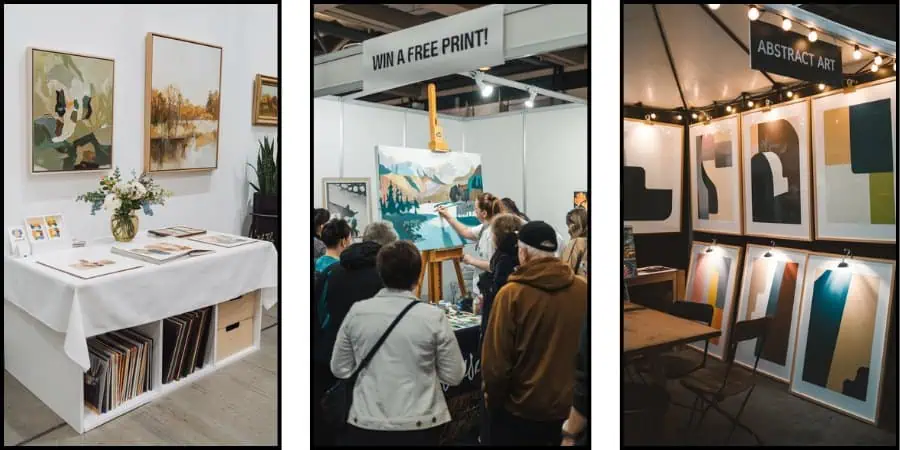
Picture This: A sleek, modern art booth illuminated by warm string lights that elegantly frame the top edge of the canopy. The soft glow creates a welcoming and inviting atmosphere, immediately drawing the eye to the display.
Beneath the lights, a series of bold, geometric abstract paintings are showcased in clean, minimalist frames. The pieces are arranged in a gallery-style layout, with larger works displayed prominently on the walls and smaller ones leaning below for easy browsing.
Each painting is individually lit by clip-on spotlights, which enhance their vibrant colors and sharp contrasts. The lighting creates a professional and polished look, making the art stand out.
In the foreground, a cozy table and chairs invite visitors to engage and linger, creating a space that feels both curated and approachable.
Read This: This is How to Sell Abstract Art: A Practical Guide For Artists
2. Use Vertical Space to Showcase Your Work
You’re walking through an art show, scanning booth after booth. Suddenly, a display with artwork arranged neatly on tall panels catches your eye. It’s bold, organized, and impossible to ignore. Using vertical space not only maximizes your booth’s layout but ensures your art grabs attention the moment someone walks by.
Steps to Recreate This:
- Invest in sturdy grid walls, pegboards, or professional display panels.
- Use hooks or clips to hang your art securely.
- Arrange pieces at varying heights, keeping the most eye-catching ones at eye level.
- Group similar themes or colors together for a cohesive look.

Picture This: Your booth is a miniature gallery, with bold artwork carefully arranged on sleek, tall panels. Each piece is bathed in soft, directional lighting, catching the eye of passersby.
The cohesive arrangement invites viewers to step closer at head height and admire the details, creating a sense of flow that feels professional and intentional. It’s as if they’re walking into a private gallery, curated to showcase the very best of your talent.
The ambiance, enhanced by the perfect balance of light and space, makes your art undeniably the star of the show.
3. Create a Feature Table for Smaller Items
Why it works: Highlighting affordable or small items can help attract impulse buyers who may not be ready to purchase larger pieces.
How to do it:
- Set up a small front table with prints, postcards, or mini artworks.
- Use tiered stands or decorative crates to add dimension.
- Include a sign like, “Take a Piece Home Today!”

Picture This: A beautifully arranged feature table displaying small framed prints and postcards. Each piece is propped up on sleek stands, ensuring visibility and easy browsing. Various frame styles and sizes add dimension and charm to the display.
The table is adorned with a fresh touch of greenery, which creates a soft, natural accent that enhances the appeal of the artwork. The greenery adds subtle texture without overwhelming the clean and organized layout.
At the center of the table, a tasteful sign labeled “BESTSELLERS” draws attention and guides visitors to these popular pieces. The elegant cream-colored tablecloth provides a neutral background, ensuring the focus stays on the artwork itself.
The setting feels approachable and professional, inviting customers to linger and explore the collection while providing a curated shopping experience.
These Guides offer sound advice:
- What Kind of Art Sells Best? The Popular Subjects Revealed
- 12 Wildlife Art Bestsellers (Use These Subjects to Make Money)
- 7 Bird Art Bestsellers: Best Wall Art Selling Guide
- 9 Farm Animal Art Bestsellers: A Selling Guide for Artists
4. Add a Personal Touch with Your Artist Story
Why it works: People love to connect with the person behind the art. Sharing your story creates a personal bond that can influence purchasing decisions.
How to do it:
- Display a small chalkboard or framed sign with your artist bio.
- Include a QR code linking to your website or portfolio.
- Offer a brief “meet the artist” moment if the event allows.

Picture This: A framed artist bio, elegantly displayed in a natural wooden frame, sits on a stand, offering visitors a personal glimpse into the creative mind behind the artwork.
The bio features a professional photo of the artist and a concise description of their journey, creating an immediate sense of connection and trust.
Next to it, an open sketchbook reveals delicate hand-drawn floral illustrations, showcasing the artist’s process and attention to detail. The soft, pastel tones of the artwork beautifully contrast with the clean, black tablecloth beneath, emphasizing the work’s refined elegance.
A clear, acrylic box labeled “COMMENTS” invites visitors to leave feedback. Nearby, a notepad and pen are neatly arranged for convenience, encouraging customers to jot down their thoughts and leave their email.
The combination of personal storytelling and interactivity makes this corner a thoughtful and inviting addition to the booth.
5. Incorporate Neutral Backdrops
Why it works: A simple, neutral backdrop allows your art to shine and creates a professional atmosphere.
How to do it:
- Use neutral-colored fabrics or lightweight panels for the backdrop.
- Avoid patterns or bold colors that clash with your art.
- Add a subtle texture like linen or canvas for extra depth.

Picture This: A booth designed with simplicity and elegance, featuring soft beige panels that create the perfect neutral backdrop. The warm tone of the panels ensures the artwork stands out without distraction.
Read This: Cheap Art Display Panels: Make Your Own For Art Shows
The walls are adorned with framed black-and-white photography or it could be artwork. Each piece is spaced evenly, offering a gallery-like feel that draws attention to the dramatic contrasts and evocative landscapes within the images.
At the center of the setup is a sleek table. It’s carefully arranged with additional framed prints laid flat, inviting visitors to engage more closely with the details of the pieces.
A small selection of business cards and flyers is neatly displayed, making it easy for customers to take your contact information. A modern desk lamp provides a soft, focused light over the tabletop, adding both functionality and ambiance.
Read This One: Artist Business Cards: 6 Tips For Artists – From a Pro
To complete the space, a simple black chair and a potted plant add balance and comfort. The entire setup exudes professionalism, creating an inviting yet timeless display for fine art photography.
6. Offer Interactive Elements
Why it works: Engaging activities encourage visitors to linger and create a memorable experience.
How to do it:
- Set up a small sketching demo or live painting session.
- Provide a guestbook for visitors to leave messages or feedback.
- Add a giveaway with a sign-up sheet or QR code.

Picture This: A vibrant booth buzzing with activity as an artist paints on a large canvas perched on an easel. The brushstrokes bring a colorful landscape to life, instantly captivating the crowd.
A group of curious onlookers gathers around, watching the artist’s process with awe and fascination. The live painting session draws them in, creating a sense of connection and wonder.
This will help: How To Draw in Public: The Experience of an Artist
Above the booth, a bold sign reads, “WIN A FREE PRINT!” The offer adds excitement to the atmosphere, enticing visitors to stay longer and participate.
The setup is simple yet effective, with paints, brushes, and tools displayed neatly on a table below the easel. The energy and interactivity make this booth a standout, leaving a lasting impression on every visitor who stops by.
7. Show Both Framed and Unframed Options
Why it works: Offering flexibility appeals to a wider range of buyers, from casual collectors to seasoned art enthusiasts.
How to do it:
- Display framed pieces on walls or easels.
- Place unframed prints in a bin or neatly stacked on a table.
- Clearly label price differences between framed and unframed options.

Picture This: A neatly organized bin brimming with unframed prints, each carefully protected in a clear sleeve. The bin invites visitors to flip through a diverse collection, offering an affordable and accessible option for art lovers.
Above the bin, a clean and bold sign reads, “Framed and Unframed Available,” clearly communicating flexibility and choice to potential buyers. It makes the booth appealing to a wider audience, from casual shoppers to serious collectors.
The wall beside the bin features an elegant arrangement of framed art. Gold and black frames in various styles add a touch of sophistication, showcasing the art in a way that feels professional and inspiring.
The contrast between the framed and unframed options creates visual interest while emphasizing there’s something for all. This setup perfectly balances practicality and polished presentation, making the booth an inviting space for art enthusiasts.
This guide is handy: A Quick Guide to Framing on a Budget: No Fluff
8. Use Props to Enhance the Display
Why it works: Props help set a theme and create visual interest without overshadowing your artwork.
How to do it:
- Add decorative items like vases, small plants, or rustic crates.
- Match props to your art style, whether modern, rustic, or eclectic.
- Use neutral tones that complement, rather than distract from, your work.

Picture This: A booth with a minimalist yet stylish vibe, featuring a modern, matte ceramic vase filled with soft, natural-colored dried pampas grass. The neutral tones of the pampas grass provide a warm and organic contrast to the bold, vibrant geometric artwork displayed around it.
The collection of abstract paintings, with their dynamic shapes and pops of color, creates a sense of energy and modernity. Each piece is carefully arranged on the wall and leaning against the booth backdrop, giving visitors different perspectives to enjoy.
Try These: How to Sell More Art: 10 Selling Tips for Art Fairs
The vase sits elegantly on a simple wooden stand, adding height and dimension to the display while complementing the natural theme. The combination of earthy textures and striking art gives the booth a balanced, curated look that feels both welcoming and contemporary.
This thoughtful mix of art and decor invites visitors to step closer, linger, and imagine how these pieces might transform their own spaces.
9. Keep It Tidy and Organized
Why it works: A clutter-free booth looks more professional and invites visitors to browse comfortably.
How to do it:
- Use hidden storage bins under tables for extra inventory.
- Regularly tidy up as the day goes on.
- Keep smaller items like business cards or packaging neatly arranged.

Picture This: A bright and inviting booth featuring a crisp white tablecloth draped over a sturdy display table. Beneath the table, a clever storage unit neatly holds a collection of larger prints and supplies, keeping everything organized and out of sight while maintaining the booth’s clean aesthetic.
On top of the table, carefully arranged artworks and open portfolios invite visitors to browse through the collection. A small, tidy business card holder sits prominently at the corner, making it easy for customers to grab your contact information.
Two framed paintings hang above the table, adding depth and elegance to the booth. Their soft, natural tones perfectly complement the vase of fresh flowers centered on the table, adding a welcoming and artistic touch.
This setup is the perfect mix of functionality and charm, offering a polished and professional feel while encouraging visitors to linger and explore.
10. Showcase a Limited-Time Offer
Why it works: A sense of urgency can motivate buyers to make a purchase on the spot.
How to do it:
- Highlight a “limited-edition” piece or exclusive fair discount.
- Use bold signage like, “Only Available Today!”
- Mention the offer to visitors as they browse.

Picture This: A bold and eye-catching booth with a large sign reading, “LIMITED EDITION – LAST FEW,” creating a sense of exclusivity and urgency. The sign stands tall next to a striking centerpiece artwork: a breathtaking photograph of a city skyline printed on a sleek, high-quality canvas.
The table below showcases a variety of smaller prints in matching frames, perfectly laid out in neat rows. Each piece reflects the same professional quality, giving visitors multiple options to take home a piece of the collection.
This will give you an insight: What Size Art Sells Best? Prints and Frame Sizes
The clean black tablecloth and clear labeling enhance the polished presentation, ensuring the focus stays on the artwork. In the background, lush green plants add a natural element that subtly balances the urban theme of the photography.
This booth exudes professionalism and elegance, making it a standout spot that entices buyers to invest in one of the remaining limited-edition pieces before they’re gone.
Art Show Display Ideas: Wrapping It Up
These 10 art booth display ideas will help you create a space that’s not only functional but also inviting and memorable. By combining creativity with smart presentation techniques, you can transform your booth into a must-visit spot at any art fair.
What’s your next step? Pick one idea to implement at your next event and let your art do the rest!

My Proof: How to Sell Art on The Street: By a Street Artist
Having a good display is only one aspect of selling art. If you want my advice, all based on first-hand experience, with nothing held back, check out this guide.
Here are a few more resources for you:
- Can You Copy Art and Sell a Painting of a Painting? I Found Out
- Who Buys Art and How to Spot a Buyer? (Secrets Revealed)
- Why Your Art Doesn’t Sell and How to Solve the Problem
- How to Negotiate the Price of Your Art: Prints and Originals
- What Size Art Sells Best? Prints and Frame Sizes
- How to Build Trust With Customers and Sell More Art
- How to Name Your Artwork: Find a Title That Sells
Pin This


Hi, I’m Kevin Hayler
I’ve been selling my wildlife art and traveling the world for over 20 years, and if that sounds too good to be true, I’ve done it all without social media, art school, or galleries!
I can show you how to do it. You’ll find a wealth of info on my site, about selling art, drawing tips, lifestyle, reviews, travel, my portfolio, and more. Enjoy