

Drawing water is one of the hardest techniques to master, it distorts, sparkles, and changes shape. The challenge is deciding which parts matter and which details to leave out.
Over the years I’ve drawn water in many different ways and each drawing forced me to solve a different problem. Sometimes the water became the main subject. Other times it acted as a stage that helped the animal stand out.
These five drawings show different approaches I used to create the illusion of water using graphite pencils. They aren’t step-by-step lessons. Instead, I’ll explain what caught my eye, the decisions I made, and a few tricks that helped me create the effects you see.
Disclaimer: When you buy something via my affiliate links I earn from qualifying purchases and sometimes earn a commission, at no extra cost to you. I am an Amazon Associate among others. I only recommend trusted sites.
Why I Keep Coming Back to Drawing Water
I realized very early in my career that water sold art.
Whenever I was stuck for a new idea, needed fresh stock for my stall, or wanted to create something that would catch people’s attention, I would almost always turn to a scene involving water. It became a reliable theme that rarely let me down.
I don’t think that’s a coincidence. Water adds something extra to a picture. A portrait of an animal can be interesting on its own, but place that same subject in water and suddenly you have reflections, ripples, movement, sparkle, and atmosphere. The image becomes more engaging.
Water also creates natural contrast. It can frame a subject, isolate it from the background, and direct the viewer’s eye exactly where you want it to go. Reflections can double the visual interest, while highlights dancing across the surface can add energy to an otherwise simple composition.
As your experience grows, something else starts to happen. You become less dependent on reference photos for every little detail. After drawing enough water, you begin to recognize patterns that repeat themselves.
Certain reflections behave in predictable ways. Highlights tend to follow a few simple rules. Ripples distort shapes in ways that become familiar. You start to understand what looks believable and what doesn’t.
That doesn’t mean you stop using references. I still rely on them heavily. What changes is that you gain the confidence to adapt what you see, combine ideas from different photos, and even invent parts of the water when it helps the composition.
The more water you draw, the larger your visual library becomes, and the easier it is to create convincing effects without copying every detail exactly.
Lets move on to the first drawing.

‘Cool Waters’ A Drawing of a White Tiger
The tiger itself is fairly straightforward, but the water is doing most of the work. The dark surface creates a strong contrast against the pale fur, helping the animal stand out immediately. The reflection beneath the tiger adds extra interest and helps anchor the subject within the scene.
One thing I learned while drawing this piece is that reflections don’t need to be copied exactly. Water distorts shapes constantly. If you compare the reflection to the tiger itself, you’ll see that the shapes are stretched, broken, and interrupted by ripples. Creating a believable reflection is often more important than creating a perfect one.
The bright highlights around the tiger were equally important. Those scattered sparkles suggest movement and help describe the surface of the water without forcing me to draw every detail. A few carefully placed highlights can often say more than hours of rendering.
This drawing reinforced a lesson I’ve used many times since. Water works best when you simplify it. Suggest enough detail to make it believable, then let the viewer’s eye fill in the rest.

‘A Happy Face’ A Drawing of a Bottlenose Dolphin
This dolphin drawing was all about transparency. Unlike reflections or dark water, the challenge here was making the water look crystal clear while still feeling solid and believable.
The first thing that attracted me to the reference was the way the dolphin could be seen beneath the surface. The water wasn’t hiding the animal, it was revealing it. That gave me the opportunity to play with subtle distortions, soft transitions, and overlapping layers of tone.
The biggest challenge was clearly separating the dolphin from the water. If I had been painting the scene, I could have relied on color contrasts to make the dolphin stand out.. With graphite, I didn’t have that luxury. Everything had to be defined using tone and texture.
I used the smooth texture of the dolphin’s skin to contrast against the constantly changing patterns in the water and the slightly grainy sand seen through the shallow water. The ripples, highlights, and refracted light create visual noise around the animal, while the dolphin itself remains comparatively simple. That difference helps the subject stand out.
The tonal range was very important. The deepest darks were reserved for the shadows beneath the dolphin and within the wave patterns, while the brightest whites were used sparingly to suggest sunlight catching the water surface. Those extremes helped create depth and gave the water a transparent quality.

‘The Duckpond’ A Drawing of a Mallard Duck on a Pond
This drawing focuses on a different aspect of water. Instead of transparency or sparkling highlights, the challenge here was capturing reflections and the subtle shadows that drift across the surface of a quiet pond.
At first glance, reflections can look complicated, but they often follow a few simple rules. Objects reflected in still water tend to stretch vertically, while gentle movement breaks those reflections into soft, wavy patterns. The fallen tree and branches were ideal subjects because their reflections created interesting shapes without becoming chaotic.
The shadows were just as important as the reflections. They create layers over the water surface. I added them after having drawn the reflections. Without those shadows, the surface would look flat and unconvincing.
I was also drawn to the abstract nature of the scene. The reflected branches twist and bend into patterns that barely resemble the objects above them. Water has a way of turning ordinary subjects into something far more interesting.
You can see how the light tree trunk reflects darker and the ducks dark breast reflects lighter. It’s not a golden rule, but when in doubt, use it. You be amazed how realistic it will be.

‘Backstroke’ A Drawing of a River Otter
This otter drawing is one of the oldest pieces in this collection, and looking back at it now, I can clearly see how my techniques have changed over the years.
At the time, I hadn’t yet discovered how useful eraser pens and battery erasers could be when drawing water. Today I would build a mid-tone base and lift out many of the highlights afterwards. Back then, I did things the hard way. Almost every highlight, ripple, and reflection was drawn around individually from the start.
That made the process incredibly slow. The water surrounding the otter is made up of countless distorted reflections and bright highlights, all weaving together to create a confusing mass of shapes.
I carefully preserved the lighter areas as I went. I used the grid method to draw in every ripple. I had to use a magnifying glass to help..
The real challenge was making the otter visible within all that visual chaos. The body is largely submerged, so I had to rely on subtle tonal shifts and a few strategic dark shapes to define its form beneath the surface.
Despite the laborious approach, I’m still fond of this drawing. It reminds me that there is rarely a single way to solve a problem. The techniques I use today are faster and more efficient, but the lessons I learned from struggling through drawings like this still influence my work now.

‘A Close Encounter’ A Drawing of a Great White Shark
Of all the drawings shown here, this great white shark probably demonstrates my approach to water most clearly. People often assume the difficult part is drawing every splash and droplet, but not really. I had to figure out what not to draw. Drawing the splashes was relatively easy.
The first thing I established was the dark water. I deliberately kept those tones dark, smooth, and uncluttered. The temptation is to add extra detail everywhere, but that only weakens the effect. The complexity of the white spray stands out because it is surrounded by large areas of calm, uninterrupted tone.
Once the darker values were in place, I began lifting out the highlights with a battery eraser.. This is where water starts to come alive. The foam, spray, and sparkling droplets were created gradually by erasing back into the graphite and refining the shapes until they looked convincing.
Accuracy was less important than creating a believable impression of moving water.
I also paid close attention to contrast. The brightest highlights sit against the darkest tones, making the spray appear luminous and energetic. Without that tonal separation, the whole effect would collapse.
This drawing reinforced a lesson I’ve used ever since. When drawing turbulent water, simplicity is often more important than detail. The fewer marks you need to create the illusion, the more convincing the result can be.
5 Examples of Drawing Water: Final Thoughts
Every scene presents a different problem to solve. Recipes create generic unconvincing artwork.
Still water relies on reflections. A pond covered in ripples becomes a study of shape and tone. Clear water introduces transparency and refraction. Splashes and spray depend on contrast and carefully placed highlights. The techniques might overlap and your challenge is to combine them. It’s like a puzzle.
There is always something new to learn. Even now, I still experiment, make mistakes, and occasionally find a better way of doing things.
If you’re trying to improve your own drawings, don’t worry about mastering every type of water effect at once. Pick one challenge and study it closely. Learn how reflections behave. Learn how highlights sit on the surface. Learn how shadows can define the shape of the water.
Before long you’ll start recognizing patterns, and once that happens, drawing water becomes far less mysterious. Instead of feeling intimidated by it, you’ll start seeing opportunities everywhere.
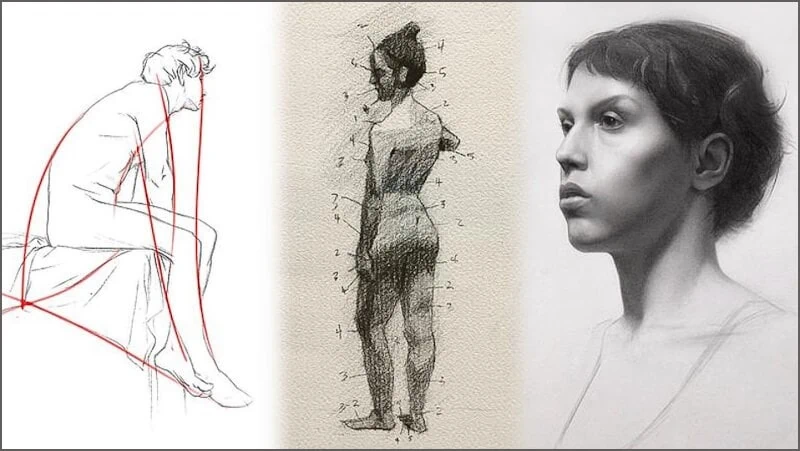
If you lack confidence maybe you should consider a drawing course. If you you want a good one, check out Dorian Iten
You will enjoy these posts too:
- How to Draw Water in Pencil: Drawing Water Step by Step
- How to Draw Realistic Shadows in Pencil: Light and Shade
- Prevent Your Drawings From Smudging: The Ultimate Guide
- 9 Ways to Stop Pencil Shine in a Drawing and Save Your Work!
- How to Draw White Lines in a Pencil Drawing: Do This…
- How to Know When Your Drawing is Finished: Don’t Ruin it!
- How to Make Your Drawings Interesting: 14 Pro Tips
- How to Plan and Compose Your Art: A Beginners Guide
- How to Protect and Preserve Your Pencil Drawings Properly
- How to Scale Up a Drawing in 4 Easy Ways
- How to Create Depth in Your Drawing: 7 Pro Tips
PIN THIS


Hi, I’m Kevin Hayler
I’ve been selling my wildlife art and traveling the world for over 20 years, and if that sounds too good to be true, I’ve done it all without social media, art school, or galleries!
I can show you how to do it. You’ll find a wealth of info on my site, about selling art, drawing tips, lifestyle, reviews, travel, my portfolio, and more. Enjoy