

Storytelling is the easiest way to sell anything, including your art. At a market stall, you get a few seconds to grab attension.
If your picture doesn’t hook them fast, it’s just wallpaper.
I’ve sold prints from a stall for over 20 years, and storytelling is what closes the sale for me. In this post, I’ll show you how to build a storyline into your drawings, how to use titles and captions to do some of the selling for you, and how to use your own mini anecdotes to seal the deal.
People Stop For a Story, Not Just a Likeness
The most eye-catching drawings have a narrative. Something’s happening.
A technically perfect drawing with nothing going on just gets glanced at. A print with a question mark hanging over it gets picked up.
When I’m drawing, I ask myself three things:
- What is this animal doing?
- Why is it happening?
- What happens next?
If a stranger can ask themselves those same questions just by looking at your print, you’re onto something.
At a stall, this “pause and pick up” moment is the whole battle. You’re not selling to someone who’s already made up their mind. You’re stopping foot traffic in its tracks, and storytelling is a vital element that clinches the deal.
Eye Contact Sells Prints
We’re hardwired to respond to eye contact. It’s instinct, not choice.
That’s why most of my animals look straight out at the viewer. It creates a connection before you’ve said a single word.
Mother-and-baby scenes work especially well here. That kind of eye contact resonates with women in particular. That’s not a guess, it’s 20 years of watching who buys what off my stall.

Think about how you display your prints, too. A print that makes eye contact from eye level does half the work for you, especially when you’re busy serving someone else.
That’s visual storytelling working for you even when you’re occupied.
Give Every Print a Short Backstory
What you say matters. Short stories tip the balance when a customer’s on the fence. Think of them like your best anecdotes: short and sweet, and they get better with time.
Not every drawing has a gripping backstory, and that’s fine. If the real story’s dull, find another angle. Point out a hidden detail, a sneaky technique, or just crack a joke. Anything that gets the customer talking to you.
This is where a market stall beats an online shop. You’re standing right there. A 15-second story told face-to-face beats a paragraph on a product page every time.
Take my lion print, “Head of the Family.” The title does most of the selling. Customers buy it as a joke about their own dad. Some even get it tattooed. That’s the kind of pull that makes a sale.

Titles and Captions Are Part of the Story
You won’t always be free to chat. Someone might be paying while another customer’s browsing your prints.
That’s where titles and captions earn their keep. They carry the storytelling when you can’t.
Every print of mine has a title and a few lines of context on display next to it. It’s another chance to connect the buyer to the subject, even without me saying a word.
Treat that little write-up like a mini sales pitch, not just a label. A good title and a couple of well-chosen lines can do as much work as your best in-person pitch.
Keep the title short. Three or four syllables is plenty. Idioms, puns, and little plays on words tend to work best because they’re easy to remember and easy to say out loud.
My panda drawing “Bamboo Breakfast” is a good example. It’s snappy, it fits the scene, and it makes people smile before they’ve even read the whole caption.
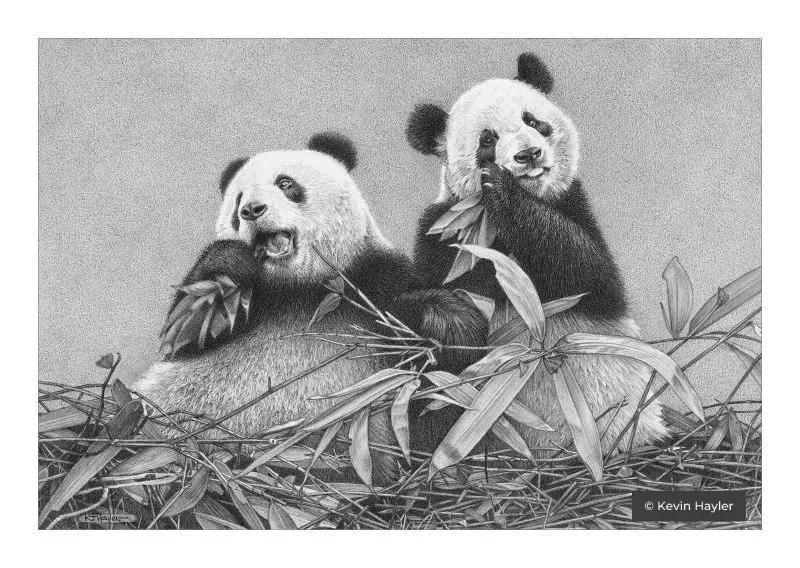
Your caption should back the title up. Two or three sentences is enough: name the subject, mention the size, and add a small detail or thought that draws them in. Keep it upbeat. Never underestimate a good title’s pull on a sale.
Know Which Stories Not to Tell
Not every story lands the way you want it to.
I once drew a baby elephant feeding from a bottle. Technically, it was one of my best pieces. But the prints never sold as well I hoped.

Why? Because of the story it told. To me, it was a heartwarming rescue of a baby elephant, to buyers, it read as tragic orphan. Sadness is a hard thing to sell.
Before you write something about your art, check what story it tells a stranger. Show it to a friend and ask them what’s happening in the picture. Their answer might surprise you.
Sentiment sells, but the wrong emotion can kill a sale even when the drawing itself is spot on.
Storytelling For Artists: Final Thoughts
Skill gets someone to notice your stall. Storytelling is what gets them to buy.
Every print you sell is really two things: a picture, and the story wrapped around it. Get the story right, and even a simple drawing can outsell a technically flawless one with nothing to say.
You’ve got an edge over an online shop, too. You’re standing right there to deliver that story yourself, face-to-face, in real time. A stranger skim-reading your website is not likely to feel something. A stranger at your stall just has to listen. It’s very different.
So use that edge. Prep a short line for your best prints, the ones with the strongest hook, and have them ready and on show when someone stops.
Next time you’re setting up, walk along your stall and ask yourself one question for each print: what story is this telling, and can I say it in a single sentence? If you can’t, it’s probably time to rework it.
Want More Like This?
Storytelling is just one piece of selling art face to face. There’s a lot more that goes into turning browsers into buyers at a market stall.
I’ve packed everything I’ve learned over 20 years of stall selling into my book, Selling Art Made Simple. It covers pricing, display, pitching, handling customers, and yes, storytelling too, all from someone who’s actually done it, not just theorized about it.
If you’re serious about making a living from your art, it’s worth a look.

If you enjoyed this post I have many more like this:
- Pricing Art For Beginners: Originals, Art Prints, and Formulas
- What Kind of Art Sells Best? All The Secrets Revealed
- What Size Art Sells Best? Frames and Apertures – FREE Chart
- How to Talk About Your Art
- How to Upsell Art for a Bigger Profit
- How to Write a Good Art Description
- How to Write an Artist About Me Bio: In 4 Easy Steps
- How to Ship Art Prints Safely: The Easy Way
- 10 Art Business Mistakes
PIN THIS


Hi, I’m Kevin Hayler
I’ve been selling my wildlife art and traveling the world for over 20 years, and if that sounds too good to be true, I’ve done it all without social media, art school, or galleries!
I can show you how to do it. You’ll find a wealth of info on my site, about selling art, drawing tips, lifestyle, reviews, travel, my portfolio, and more. Enjoy