

Custom framing costs a fortune. Even a custom matboard can cost more than your print. That hurts.
What if there was a DIY framing hack that looks great but doesn’t break the bank?
There is, and you don’t have to go near a framer. You can make your own mat from textured watercolor paper.
In this post, I’ll show you how to cut your own mat at home, using simple materials to keep costs low.
Read on…
Disclaimer: When you buy something via my affiliate links I earn from qualifying purchases and sometimes earn a commission, at no extra cost to you. I am an Amazon Associate among others. I only recommend trusted sites.
Why Use Watercolor Paper for Your Mat?
Here are 5 reasons, right off the bat:
- It already looks like a finished surface, so you don’t need decoration or extra layers.
- Most watercolor paper is acid-free, which helps protect your artwork over time.
- You can buy it in single sheets, so you don’t have to pay for full packs of matboard.
- It comes in neutral off white shades that suit almost any image, especially black and white art.
- You can easily do it yourself with a craft knife and ruler
The Type of Watercolor Paper You Should Buy
Look for cold pressed watercolor paper. It is sometimes called “not” paper, as in not hot pressed.
Cold pressed paper has a light texture. It looks soft and natural around artwork. Hot pressed paper is too smooth and looks flat. It can also show cutting mistakes more easily.
Choose an off white or warm white sheet. Avoid bright white. It looks harsh next to most drawings and prints.

When You Should Not Use Watercolor Paper
Do not use watercolor paper for art that must not touch the glass.
Soft mediums like charcoal and pastel need a deep mount. They need space between the artwork and the glass. A thin watercolor paper mat does not give you that space.
For those types of work, you need a proper thick mount or a spacer. This method is for prints, ink drawings, watercolors, and pencil drawings that are safe to sit close to the glass.
Measuring and Cutting the Mat Opening
Before you cut anything, get your tools ready. They are cheap and you might already own them.
Material Needed:
- A razor sharp blade, like a craft knife: Use a new blade. A dull one will tear the paper and leave fuzzy edges.
- A metal ruler: For reliably clean sharp edges and safety.
- A Set Square: Essential for true 90 degree angles and a perfect opening
- A kneadable eraser or thin disposable gloves: Watercolor paper get dirty easily
- Framers tape for attaching the print: Acid-free, low tack tape is best
That’s the kit, but you’ll also need a cutting surface. In an ideal world you’d use a cutting mat, but I doubt if many people will have one, or want to buy one for this job.
The alternative is to lay down CLEAN cardboard and use that as your cutting surface. Don’t cut on the table if you value it!
So first, measure your image, not the sheet of paper it’s printed on. What you do next depends on the frame you already have, or the frame you plan to buy.
If your image is neat and square, you can leave a thin white border showing around it. That border helps separate the image from the mat and makes everything look more deliberate.
If the edges are uneven or slightly out of square, then cut the opening a bit smaller and let the mat overlap the image. That way it hides any messy edges and keeps the focus on the picture.
Mark the opening on the back of the watercolor paper with a light pencil line. Check the measurements twice before you cut, because once you cut it, there’s no fixing it.
Make sure your angles are really 90 degrees at each corner. It’s so easy to mess up.
Always cut against a metal ruler. Plastic ones get chewed up by blades and your line will wander.
Don’t try to cut through in one pass. Take a few light passes with the blade and let it work through the paper.
Keep the blade straight up and down as you cut. If you lean it over, the edge will look rough when you see it from the front.
Turn the paper as you work, not your hand. It’s much easier to keep the line straight that way and you stay in control of the cut.
Using Wide Margins to Make Art Look Stylish
Wide margins make an image feel more sophisticated. You’re giving it space to breathe instead of cramming it into the frame. That empty area around the picture pulls your eye in and makes the artwork feel center-staged.
This works especially well with small prints and drawings. A tiny image with a wide mat suddenly feels like it belongs on the wall instead of on a desk.
There’s no magic measurement, but the mat should usually be much wider than the image border itself. I think 2 inches is the minimum width.
A narrow mat just looks cheap. A wider one gives the picture presence. If the art is very small, don’t be afraid to go big with the margins. It often looks better than playing it safe.
What matters most is that the spacing looks even. You can make each margin the same if your frame is the same aspect ratio as the image. That is unlikely if you buy a ready frame.
If you can’t find a perfect match, buy a larger frame and ensure the top margin and the 2 sides are all the same width but allow the bottom margin to be wider. This works well.
Take your time with this part.
Double Mounting for Extra Depth
Double mounting is just using two mats instead of one. It adds depth and makes the artwork feel more considered, even though it’s still a simple DIY job.
You cut a normal window in the top mat, then place a second mat above it with a slightly larger opening. That small step down between the two layers creates a shadow line around the image. It’s subtle, but it makes a big difference to how the piece looks on the wall.
This works really well with watercolor paper because the texture softens the edge between the two layers. It stops the mount looking flat and gives the artwork more presence without using thick board.
Keep the lower mount a similar off white tone, or slightly darker than the top one. You don’t want it shouting for attention. It’s there to frame the image, not compete with it.
If you have the confidence you can apply a watercolor wash around the smaller aperture to add some interest.
Double mounting is especially useful for black and white work and small prints. It gives them more visual weight.
Mounting Your Print/Artwork
Once the mat is cut, you need to fix the artwork to it. This is where framers tape comes in. Follow this method and save yourself some time and effort.
- Cut a backing board to the same size as your mat.
- Tape the mat to the backing board along the top edge so it opens like a lid.
- Put the print on the backing board and close the lid.
- Now slide the print around until it sits perfectly in the window.
- When it looks right, lift the lid and tape the print down with two small hinge strips along the top edge.
- Flip the print over and add two tape hinges on the back.
- Flip it back again and remove the two strips from the front.
- Close the lid. Job done.

DIY Picture Frame Mats: Final Thoughts
You don’t need custom mounts to make your work look good on the wall. You just need decent paper, careful measuring, and clean cuts.
Watercolor paper gives you texture, soft color, and an acid free surface without paying custom framing prices. Wide margins, an off-white border, and optional double-mounting do most of the visual work for you.
This is a cheap way to make prints and drawings look presentable and professional.
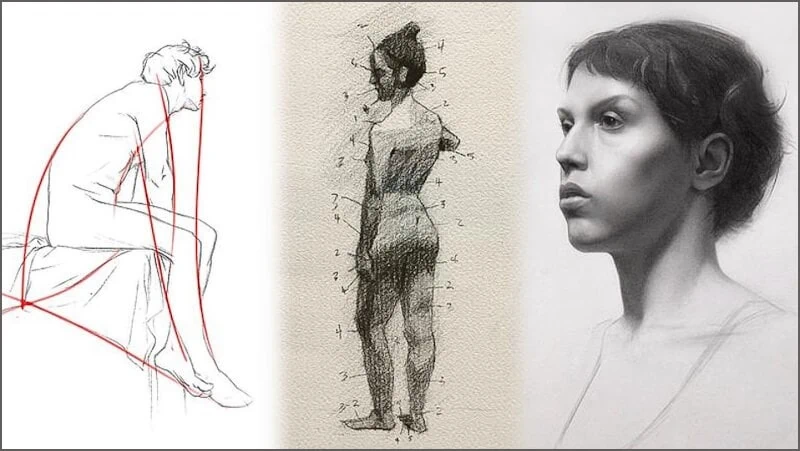
If you need help with drawing, then I urge you to check out
Dorian Iten on Proko. His course is reasonably priced and inspiring
These are related articles :
- A Quick Guide to Framing on a Budget: No Fluff
- Where and How to Print Art Prints From Etsy (Downloads / Printables)
- What Are Limited Edition Prints? 12 Things You’ve Got to Know
- How to Frame Black and White Art Like a Pro
- 10 Easy Ways to Frame Black and White Art
- Repair Damaged Drawing Paper – 8 Ways to Rescue Your Artwork
- How to Make Prints of Your Art – Printing Art Explained in Detail
Pin This


Hi, I’m Kevin Hayler
I’ve been selling my wildlife art and traveling the world for over 20 years, and if that sounds too good to be true, I’ve done it all without social media, art school, or galleries!
I can show you how to do it. You’ll find a wealth of info on my site, about selling art, drawing tips, lifestyle, reviews, travel, my portfolio, and more. Enjoy